






Diese Website verwendet Cookies und ähnliche Technologien. Dabei handelt es sich um kleine Textdateien, die auf eurem Computer gespeichert und ausgelesen werden. Indem ihr auf "Alles akzeptieren" klickt, stimmt ihr der Verarbeitung von Daten, der Erstellung und Verarbeitung von individuellen Nutzungsprofilen über Websites und über Partner und Geräte hinweg sowie der Übermittlung eurer Daten an Drittanbieter zu, die eure Daten teilweise in Ländern außerhalb der Europäischen Union verarbeiten (GDPR Art. 49). Einzelheiten hierzu findet ihr in den Datenschutzhinweisen. Die Daten werden für Analysen und für eigene Zwecke Dritter verwendet. Weitere Informationen, auch über die Datenverarbeitung durch Drittanbieter und die Möglichkeit des Widerrufs, findet ihr in den Einstellungen und in unseren Datenschutzhinweisen. Hier könnt ihr mit den notwendigen Tools fortfahren.
- Verlag: Taylor & Francis
- Autor: Jacqueline Warwick
- Artikel-Nr.: KNV96360311
- ISBN: 9780367487416
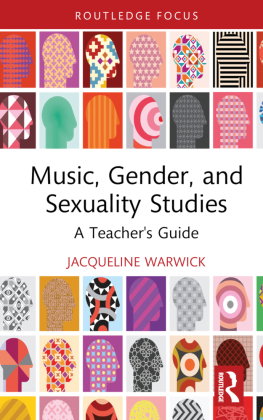
Music, Gender, and Sexuality Studies: A Teacher's Guide serves as a guide to the professor tasked with teaching music to undergraduates, with a focus on gender. Although the notion of feminist approaches in musicology was once greeted with scorn, the last 40 years have seen a seismic shift across music studies, to the point that classes on women and music are now commonplace in most undergraduate music program. The goal of this book is to give the instructor some tools and strategies that will build confidence in approaching music as it relates to gender and sexuality, and to offer some advice on how to make the class rewarding for all.
The book is organized into four broad sections, plus an introduction outlining how to use the book and how the teaching of music, gender, and sexuality can be rewarding. Each section - Composition, Support, Performance, and Audience - includes possible themes for study and examples of music that can illuminate those themes, allowing the instructor to shape the course according to their own preference for classical, jazz, or popular styles. The author offers a practical guide to building syllabi that can fit the instructor's interests and the priorities of the institution, crafting assignments that will engage and inspire students, choosing repertoire from a range of styles and genres, and maintaining a focus on how music shapes gender, and how gender shapes music.