






Diese Website verwendet Cookies und ähnliche Technologien. Dabei handelt es sich um kleine Textdateien, die auf eurem Computer gespeichert und ausgelesen werden. Indem ihr auf "Alles akzeptieren" klickt, stimmt ihr der Verarbeitung von Daten, der Erstellung und Verarbeitung von individuellen Nutzungsprofilen über Websites und über Partner und Geräte hinweg sowie der Übermittlung eurer Daten an Drittanbieter zu, die eure Daten teilweise in Ländern außerhalb der Europäischen Union verarbeiten (GDPR Art. 49). Einzelheiten hierzu findet ihr in den Datenschutzhinweisen. Die Daten werden für Analysen und für eigene Zwecke Dritter verwendet. Weitere Informationen, auch über die Datenverarbeitung durch Drittanbieter und die Möglichkeit des Widerrufs, findet ihr in den Einstellungen und in unseren Datenschutzhinweisen. Hier könnt ihr mit den notwendigen Tools fortfahren.
- Verlag: Taylor & Francis
- Autor: Rory Shand
- Artikel-Nr.: KNV96364228
- ISBN: 9781032335988
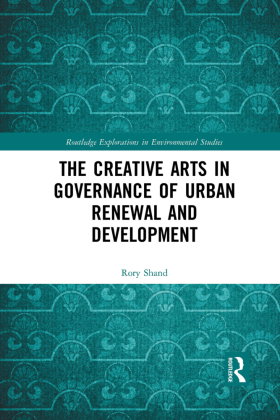
This book focuses on the role of the creative sector in the governance of urban renewal and economic development initiatives.
Rory Shand examines the ways in which both the top-down nature of the creative sector, and the bottom-up roles of creative arts organisations, drive development and engage with local communities or areas in regeneration projects that target employment, training and education, as well as social engagement. Underpinning these projects are governance mechanisms, through delivery, funding and participation. Drawing on case studies from the UK, Germany and Canada, Shand compares national creative sector policies and creative arts bodies engaged in the governance of urban renewal and development programmes, as well as including a comparative chapter offering an overview of best and worst practice, which also examines and summarises the key themes across both theory and practice. In his concluding remarks, he highlights and discusses the key challenges posed by governance mechanisms to urban renewal and economic development programmes and identifies future comparative case studies in the field.
This book will be of great interest to students of environmental studies, public policy and politics and geography, as well as being a relevant resource for practitioners from NGOs, local and national levels of governments and community projects.