






Diese Website verwendet Cookies und ähnliche Technologien. Dabei handelt es sich um kleine Textdateien, die auf eurem Computer gespeichert und ausgelesen werden. Indem ihr auf "Alles akzeptieren" klickt, stimmt ihr der Verarbeitung von Daten, der Erstellung und Verarbeitung von individuellen Nutzungsprofilen über Websites und über Partner und Geräte hinweg sowie der Übermittlung eurer Daten an Drittanbieter zu, die eure Daten teilweise in Ländern außerhalb der Europäischen Union verarbeiten (GDPR Art. 49). Einzelheiten hierzu findet ihr in den Datenschutzhinweisen. Die Daten werden für Analysen und für eigene Zwecke Dritter verwendet. Weitere Informationen, auch über die Datenverarbeitung durch Drittanbieter und die Möglichkeit des Widerrufs, findet ihr in den Einstellungen und in unseren Datenschutzhinweisen. Hier könnt ihr mit den notwendigen Tools fortfahren.
- Verlag: Taylor & Francis
- Autor: Helen Holmes
- Artikel-Nr.: KNV96363856
- ISBN: 9780367517557
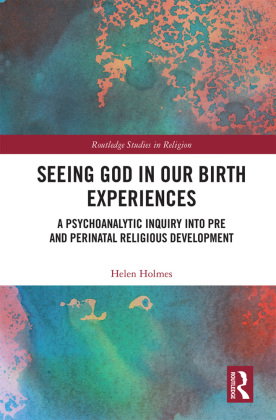
There has been a recent surge in the examination of the evolutionary roots of religious belief, all trying to identify where the human desire to seek the supernatural and the divine comes from. This book adds a new and innovative perspective to this line of thought by being the first to link prenatal and perinatal experiences to the origins of these unconscious underpinnings of our shared images of God.
The book poses a ground-breaking paradigm by thinking about our earliest images of God, whether theist or atheist, within a psychoanalytic framework, comparing and contrasting the thought of Freud and Rizzuto. It looks at the issue of images of God from a diversity of psychological perspectives including, attachment theory, developmental theory and bio-psychosocial perspectives. This analysis leads to the conclusion that in parallel to postnatal findings, uterine and birth experiences can predispose individuals to form God representations later in life, through underpinning affective and environmental factors.
This is a bold study of the development of one of humanity's most fundamental aspects. As such, it will be of great interest to scholars of the psychology of religion, psychology, psychoanalysis, religious studies and early infant development.