






Diese Website verwendet Cookies und ähnliche Technologien. Dabei handelt es sich um kleine Textdateien, die auf eurem Computer gespeichert und ausgelesen werden. Indem ihr auf "Alles akzeptieren" klickt, stimmt ihr der Verarbeitung von Daten, der Erstellung und Verarbeitung von individuellen Nutzungsprofilen über Websites und über Partner und Geräte hinweg sowie der Übermittlung eurer Daten an Drittanbieter zu, die eure Daten teilweise in Ländern außerhalb der Europäischen Union verarbeiten (GDPR Art. 49). Einzelheiten hierzu findet ihr in den Datenschutzhinweisen. Die Daten werden für Analysen und für eigene Zwecke Dritter verwendet. Weitere Informationen, auch über die Datenverarbeitung durch Drittanbieter und die Möglichkeit des Widerrufs, findet ihr in den Einstellungen und in unseren Datenschutzhinweisen. Hier könnt ihr mit den notwendigen Tools fortfahren.
- Verlag: Taylor & Francis
- Autor: Martin Curda
- Artikel-Nr.: KNV96360149
- ISBN: 9781032235622
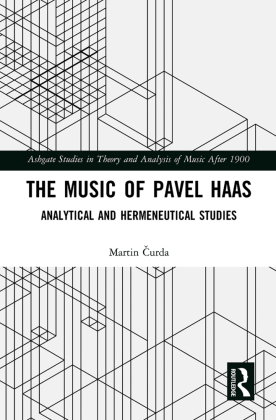
The Czech composer Pavel Haas (1899-1944) is commonly positioned in the history of twentieth-century music as a representative of Leos Janácek's compositional school and as one of the Jewish composers imprisoned by the Nazis in the concentration camp of Terezín (Theresienstadt). However, the nature of Janácek's influence remains largely unexplained and the focus on the context of the Holocaust tends to yield a one-sided view of Haas's oeuvre. The existing scholarship offers limited insight into Haas's compositional idiom and does not sufficiently explain the composer's position with respect to broader aesthetic trends and artistic networks in inter-war Czechoslovakia and beyond. This book is the first attempt to provide a comprehensive (albeit necessarily selective) discussion of Haas's music since the publication of Lubomír Peduzzi's 'life and work' monograph in 1993. It provides the reader with an enhanced understanding of Haas's music through analytical and hermeneutical interpretation as well as cultural and aesthetic contextualisation, and thus reveal the rich nuances of Haas's multi-faceted work which have not been sufficiently recognised so far.