






Diese Website verwendet Cookies und ähnliche Technologien. Dabei handelt es sich um kleine Textdateien, die auf eurem Computer gespeichert und ausgelesen werden. Indem ihr auf "Alles akzeptieren" klickt, stimmt ihr der Verarbeitung von Daten, der Erstellung und Verarbeitung von individuellen Nutzungsprofilen über Websites und über Partner und Geräte hinweg sowie der Übermittlung eurer Daten an Drittanbieter zu, die eure Daten teilweise in Ländern außerhalb der Europäischen Union verarbeiten (GDPR Art. 49). Einzelheiten hierzu findet ihr in den Datenschutzhinweisen. Die Daten werden für Analysen und für eigene Zwecke Dritter verwendet. Weitere Informationen, auch über die Datenverarbeitung durch Drittanbieter und die Möglichkeit des Widerrufs, findet ihr in den Einstellungen und in unseren Datenschutzhinweisen. Hier könnt ihr mit den notwendigen Tools fortfahren.
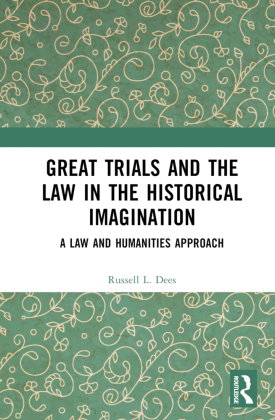
- Verlag: Taylor & Francis
- Autor: Russell L. Dees
- Artikel-Nr.: KNV96360144
- ISBN: 9781032299952
Great Trials and the Law in the Historical Imagination: A Law and Humanities Approach introduces readers to the history of law and issues in historical, legal, and artistic interpretation by examining six well-known historical trials through works of art that portray them.
Great Trials provides readers with an accessible, non-dogmatic introduction to the interdisciplinary 'law and humanities' approach to law, legal history, and legal interpretation. By examining how six famous/notorious trials in Western history have been portrayed in six major works of art, the book shows how issues of legal, historical, and artistic interpretation can become intertwined: the different ways we embed law in narrative, how we bring conscious and subconscious conceptions of history to our interpretation of law, and how aesthetic predilections and moral commitments to the law may influence our views of history. The book studies well-known depictions of the trials of Socrates, Cicero, Jesus, Thomas More, the Salem 'witches', and John Scopes and provides innovative analyses of those works. The epilogue examines how historical methodology and historical imagination are crucial to both our understanding of the law and our aesthetic choices through various readings of Harper Lee's beloved character, Atticus Finch.
The first book to employ a 'law and humanities' approach to delve into the institution of the trial, and what it means in different legal systems at different historical times, this book will appeal to academics, students and others with interests in legal history, law and popular culture and law and the humanities.