






Diese Website verwendet Cookies und ähnliche Technologien. Dabei handelt es sich um kleine Textdateien, die auf eurem Computer gespeichert und ausgelesen werden. Indem ihr auf "Alles akzeptieren" klickt, stimmt ihr der Verarbeitung von Daten, der Erstellung und Verarbeitung von individuellen Nutzungsprofilen über Websites und über Partner und Geräte hinweg sowie der Übermittlung eurer Daten an Drittanbieter zu, die eure Daten teilweise in Ländern außerhalb der Europäischen Union verarbeiten (GDPR Art. 49). Einzelheiten hierzu findet ihr in den Datenschutzhinweisen. Die Daten werden für Analysen und für eigene Zwecke Dritter verwendet. Weitere Informationen, auch über die Datenverarbeitung durch Drittanbieter und die Möglichkeit des Widerrufs, findet ihr in den Einstellungen und in unseren Datenschutzhinweisen. Hier könnt ihr mit den notwendigen Tools fortfahren.
- Verlag: Taylor & Francis
- Autor: Myriam Dunn Cavelty
- Artikel-Nr.: KNV96360129
- ISBN: 9780367626747
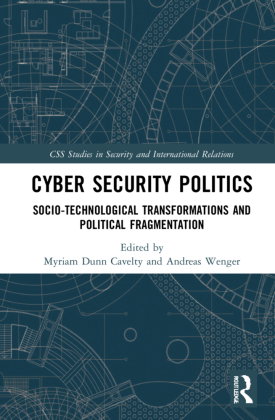
This book examines new and challenging political aspects of cyber security and presents it as an issue defined by socio-technological uncertainty and political fragmentation.
Structured along two broad themes and providing empirical examples for how socio-technical changes and political responses interact, the first part of the book looks at the current use of cyber space in conflictual settings, while the second focuses on political responses by state and non-state actors in an environment defined by uncertainties. Within this, it highlights four key debates that encapsulate the complexities and paradoxes of cyber security politics from a Western perspective - how much political influence states can achieve via cyber operations and what context factors condition the (limited) strategic utility of such operations; the role of emerging digital technologies and how the dynamics of the tech innovation process reinforce the fragmentation of the governance space; how states attempt to uphold stability in cyberspace and, more generally, in their strategic relations; and how the shared responsibility of state, economy, and society for cyber security continues to be re-negotiated in an increasingly trans-sectoral and transnational governance space.
This book will be of much interest to students of cyber security, global governance, technology studies, and international relations.
The Open Access version of this book, available at www.taylorfrancis.com, has been made available under a Creative Commons Attribution-Non Commercial-No Derivatives 4.0 license.