






Diese Website verwendet Cookies und ähnliche Technologien. Dabei handelt es sich um kleine Textdateien, die auf eurem Computer gespeichert und ausgelesen werden. Indem ihr auf "Alles akzeptieren" klickt, stimmt ihr der Verarbeitung von Daten, der Erstellung und Verarbeitung von individuellen Nutzungsprofilen über Websites und über Partner und Geräte hinweg sowie der Übermittlung eurer Daten an Drittanbieter zu, die eure Daten teilweise in Ländern außerhalb der Europäischen Union verarbeiten (GDPR Art. 49). Einzelheiten hierzu findet ihr in den Datenschutzhinweisen. Die Daten werden für Analysen und für eigene Zwecke Dritter verwendet. Weitere Informationen, auch über die Datenverarbeitung durch Drittanbieter und die Möglichkeit des Widerrufs, findet ihr in den Einstellungen und in unseren Datenschutzhinweisen. Hier könnt ihr mit den notwendigen Tools fortfahren.
- Verlag: Taylor & Francis
- Autor: Farzin Irani
- Artikel-Nr.: KNV96360121
- ISBN: 9780367509293
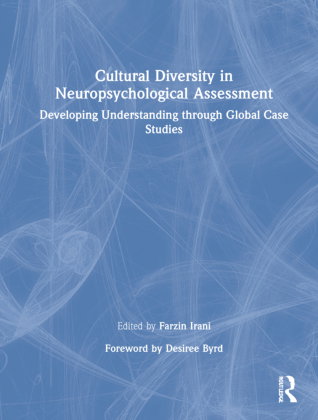
Cultural Diversity in Neuropsychological Assessment provides a platform for clinical neuropsychologists, psychologists, and trainees to bridge cultures and speak to each other about the ethnically diverse communities they serve throughout the world. It allows readers to peek into their clinical filing cabinets and examine how they worked with diverse individuals from indigenous and migrant communities of Arab, Asian, European, Israeli, Latin American and Caribbean, Persian, Russian, Sub-Saharan African, and North American origin.
The book first reviews important foundations for working with diverse communities that include key knowledge, awareness, skills, and action orientation. It then provides a collection of cases for each cultural geographic region. Each section begins with an introductory chapter to provide a bird's eye view of the historical and current state of clinical and research practice of neuropsychology in that region. Then, each chapter focuses on a specific community by providing surface and deep-level cultural background knowledge from the authors' unique perspectives. A case study is then covered in depth to practically showcase an evaluation with someone from that community. This is followed by a summary of key strategic points, lessons learned, references, further readings, and a glossary of culture specific terminology used throughout the chapter. In the end, the appendix provides a list of culturally relevant tests and norms for some communities.
This ground-breaking peer-reviewed handbook provides an invaluable clinical resource for neuropsychologists, psychologists, and trainees. It increases self-reflection about multicultural awareness and knowledge, highlights practical ways to increase cultural understanding in neuropsychological and psychological assessments, and sparks further discussion for professional and personal growth in this area.