






Diese Website verwendet Cookies und ähnliche Technologien. Dabei handelt es sich um kleine Textdateien, die auf eurem Computer gespeichert und ausgelesen werden. Indem ihr auf "Alles akzeptieren" klickt, stimmt ihr der Verarbeitung von Daten, der Erstellung und Verarbeitung von individuellen Nutzungsprofilen über Websites und über Partner und Geräte hinweg sowie der Übermittlung eurer Daten an Drittanbieter zu, die eure Daten teilweise in Ländern außerhalb der Europäischen Union verarbeiten (GDPR Art. 49). Einzelheiten hierzu findet ihr in den Datenschutzhinweisen. Die Daten werden für Analysen und für eigene Zwecke Dritter verwendet. Weitere Informationen, auch über die Datenverarbeitung durch Drittanbieter und die Möglichkeit des Widerrufs, findet ihr in den Einstellungen und in unseren Datenschutzhinweisen. Hier könnt ihr mit den notwendigen Tools fortfahren.
- Verlag: Taylor & Francis
- Autor: Mohd Ma'Sum Billah
- Artikel-Nr.: KNV96363909
- ISBN: 9780367546403
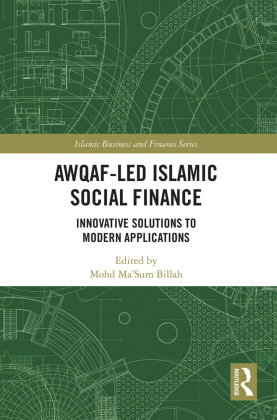
This book provides an authoritative and comprehensive overview of Waqf (endowment), addressing specific issues, models, solutions, structures and practices. As Islamic finance has gained in significance, so too has the institution of Waqf, working towards creating an enterprising and an entrepreneurial community across the globe, in order to meet the underlying objectives of the sustainable development goals (SDGs) by targeting the low-income group in particular.
The book analyses the historical context of Waqf as well as its revival in the digital era. It addresses the laws and policies affecting the management of Waqf, such as Maqasid al-Shari'ah, law and policies, law and fiscal reform, regulations applied within Muslim countries, judicial procedures and dispute resolutions and covers the core issues concerning the formalities of Waqf, its management and corporate governance questions. The book includes a series of specialised chapters focusing on the products and services of Waqf, covering product innovation, product development, and then assesses the risk factors in Waqf and Waqf Takaful. Finally, it focuses on the challenges of Waqf and offers recommendations for the way forward.
A timely and practical guide, comprising a literature review and future research directions, as well as a number of international case studies, this will be a key reference for academics, students, researchers, practitioners and policy makers.