






Diese Website verwendet Cookies und ähnliche Technologien. Dabei handelt es sich um kleine Textdateien, die auf eurem Computer gespeichert und ausgelesen werden. Indem ihr auf "Alles akzeptieren" klickt, stimmt ihr der Verarbeitung von Daten, der Erstellung und Verarbeitung von individuellen Nutzungsprofilen über Websites und über Partner und Geräte hinweg sowie der Übermittlung eurer Daten an Drittanbieter zu, die eure Daten teilweise in Ländern außerhalb der Europäischen Union verarbeiten (GDPR Art. 49). Einzelheiten hierzu findet ihr in den Datenschutzhinweisen. Die Daten werden für Analysen und für eigene Zwecke Dritter verwendet. Weitere Informationen, auch über die Datenverarbeitung durch Drittanbieter und die Möglichkeit des Widerrufs, findet ihr in den Einstellungen und in unseren Datenschutzhinweisen. Hier könnt ihr mit den notwendigen Tools fortfahren.
- Verlag: Taylor & Francis
- Autor: Emad Yaghmaei
- Artikel-Nr.: KNV96363902
- ISBN: 9780367654870
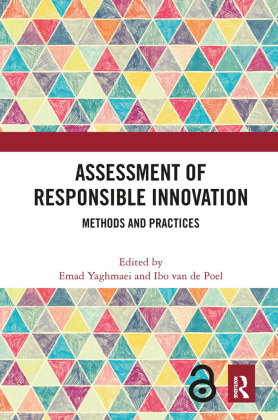
Responsible Innovation encourages innovators to work together with stakeholders during the research and innovation process, to better align the outcomes of innovation with the values, needs and expectations of society. Assessing the benefits and costs of Responsible Innovation is crucial for furthering the responsible conduct of science, technology and innovation. However, there is until now only limited academic work on Responsible Innovation assessment. This book fills this lacuna.
Assessment of Responsible Innovation: Methods and Practices presents tools for measuring, monitoring, and reporting upon the Responsible Innovation process and the social, environmental, scientific, and economic impacts of innovations. These tools help innovators to mitigate risk and to strengthen their strategic planning. This book aligns assessment tools and practices with the UN Sustainable Development Goals (SDGs). The prospects as well as the limitations of various Responsible Innovation assessment approaches and tools are discussed, as well as their applicability in various industry contexts.
The book brings together leading scholars in the field to present the most comprehensive review of Responsible Innovation tools. It articulates the importance of assessment and value creation, the different metrics and monitoring systems that can be deployed and the reporting mechanisms, including the importance of effective communication.
This book is freely available as a downloadable Open Access PDF under a Creative Commons Attribution-Non Commercial-No Derivatives 4.0 license at https://www.taylorfrancis.com/books/e/9780429298998