






Diese Website verwendet Cookies und ähnliche Technologien. Dabei handelt es sich um kleine Textdateien, die auf eurem Computer gespeichert und ausgelesen werden. Indem ihr auf "Alles akzeptieren" klickt, stimmt ihr der Verarbeitung von Daten, der Erstellung und Verarbeitung von individuellen Nutzungsprofilen über Websites und über Partner und Geräte hinweg sowie der Übermittlung eurer Daten an Drittanbieter zu, die eure Daten teilweise in Ländern außerhalb der Europäischen Union verarbeiten (GDPR Art. 49). Einzelheiten hierzu findet ihr in den Datenschutzhinweisen. Die Daten werden für Analysen und für eigene Zwecke Dritter verwendet. Weitere Informationen, auch über die Datenverarbeitung durch Drittanbieter und die Möglichkeit des Widerrufs, findet ihr in den Einstellungen und in unseren Datenschutzhinweisen. Hier könnt ihr mit den notwendigen Tools fortfahren.
- Verlag: Taylor & Francis
- Autor: Varigonda Kesava Chandra
- Artikel-Nr.: KNV96363897
- ISBN: 9780367607555
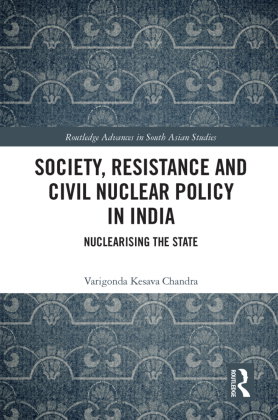
This book explores how anti-nuclear social movements impact the state's civil nuclear policy and its implementation by presenting a historical-comparative case study of anti-nuclear movements in India.
Drawing on social movement theory and empirical methods, the book demonstrates that the ability for anti-nuclear movements to impede the inception of nuclear plants - a key element of India's civil nuclear policy - is determined by the movement's collective action repertoires, the politicisation of nuclear power and the state's larger developmental paradigm, and the openness of state input structures. The case studies of anti-nuclear movements in Haripur, Kudankulam and Kovvada demonstrate how the implementation of civil nuclear policy is also determined by the state's technical and financial capacity and effective international collaboration.
With a focus on theorisation of social movements and their impact, combined with empirical studies of anti-nuclear movements, as well as the historical trajectory of civil nuclear development, the book adds a new prism to the study of India's civil nuclear policy and anti-nuclear opposition. It will be of interest to researchers working on social movements, state-society relations, energy studies and civil nuclear energy in the context of South Asia and the Global South.