






Diese Website verwendet Cookies und ähnliche Technologien. Dabei handelt es sich um kleine Textdateien, die auf eurem Computer gespeichert und ausgelesen werden. Indem ihr auf "Alles akzeptieren" klickt, stimmt ihr der Verarbeitung von Daten, der Erstellung und Verarbeitung von individuellen Nutzungsprofilen über Websites und über Partner und Geräte hinweg sowie der Übermittlung eurer Daten an Drittanbieter zu, die eure Daten teilweise in Ländern außerhalb der Europäischen Union verarbeiten (GDPR Art. 49). Einzelheiten hierzu findet ihr in den Datenschutzhinweisen. Die Daten werden für Analysen und für eigene Zwecke Dritter verwendet. Weitere Informationen, auch über die Datenverarbeitung durch Drittanbieter und die Möglichkeit des Widerrufs, findet ihr in den Einstellungen und in unseren Datenschutzhinweisen. Hier könnt ihr mit den notwendigen Tools fortfahren.
- Verlag: Taylor & Francis
- Autor: Sunil Dasharath Saroj
- Artikel-Nr.: KNV96363898
- ISBN: 9781032321615
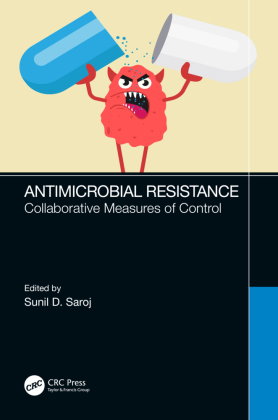
Antimicrobial resistance has existed in nature long before the discovery of antibiotics. The mechanisms of resistance are prevalent among the bacterial population. Over a period of time and facilitated by indiscriminate usage of antibiotics, these mechanisms are transferred from one type of bacteria to another, including the pathogenic ones. In addition, the rate of discovery of novel antimicrobials is much slower than the rate of evolution of antimicrobial resistance. Therefore, there is a need for alternative strategies to control antimicrobial resistance to save lives. In this book, the novel strategies to combat antimicrobial resistance are described, emphasizing collaborative measures of control. We describe the concerted efforts undertaken by global communities to combat antimicrobial resistance in detail. The most efficient strategy could be a behavioral change towards indiscriminate consumption, usage, and prescription of antibiotics.