






Diese Website verwendet Cookies und ähnliche Technologien. Dabei handelt es sich um kleine Textdateien, die auf eurem Computer gespeichert und ausgelesen werden. Indem ihr auf "Alles akzeptieren" klickt, stimmt ihr der Verarbeitung von Daten, der Erstellung und Verarbeitung von individuellen Nutzungsprofilen über Websites und über Partner und Geräte hinweg sowie der Übermittlung eurer Daten an Drittanbieter zu, die eure Daten teilweise in Ländern außerhalb der Europäischen Union verarbeiten (GDPR Art. 49). Einzelheiten hierzu findet ihr in den Datenschutzhinweisen. Die Daten werden für Analysen und für eigene Zwecke Dritter verwendet. Weitere Informationen, auch über die Datenverarbeitung durch Drittanbieter und die Möglichkeit des Widerrufs, findet ihr in den Einstellungen und in unseren Datenschutzhinweisen. Hier könnt ihr mit den notwendigen Tools fortfahren.
- Verlag: Taylor & Francis
- Autor: Rita Segato
- Artikel-Nr.: KNV96360113
- ISBN: 9780367759827
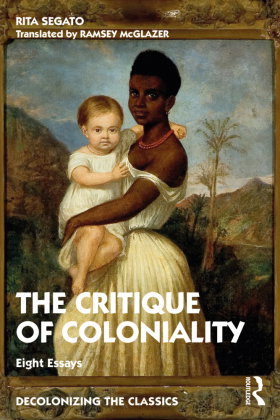
This translation of Rita Segato's seminal book La crítica de la colonialidad en ocho ensayos offers an anthropological and critical perspective on the coloniality of power as theorized by the Peruvian thinker Aníbal Quijano.
Segato begins with an overview of Quijano's conceptual framework, emphasizing the power and richness of his theory and its relevance to a range of fields. Each of the seven subsequent chapters presents a scenario in which a persistent colonial structure or form of subjectivity can be identified. These essays address urgent issues of gender, sexuality, race and racism, and indigenous forms of life. They set the decolonial perspective to work, and are connected by two central preoccupations: the critical analysis of coloniality and the effort to reimagine anthropology as "responsive anthropology," a practice at once answerable and useful to the communities previously regarded as the "objects" of ethnographic thought.
The Critique of the Coloniality makes important and original contributions to our understanding of colonial and decolonial processes, drawing on the author's experience of feminist and antiracist movements and struggles for indigenous and human rights. This book will appeal to students and scholars working in anthropology, Latin American studies, political theory, feminist and gender studies, indigenous studies, and anticolonial, post-colonial, and decolonial thought.