






Diese Website verwendet Cookies und ähnliche Technologien. Dabei handelt es sich um kleine Textdateien, die auf eurem Computer gespeichert und ausgelesen werden. Indem ihr auf "Alles akzeptieren" klickt, stimmt ihr der Verarbeitung von Daten, der Erstellung und Verarbeitung von individuellen Nutzungsprofilen über Websites und über Partner und Geräte hinweg sowie der Übermittlung eurer Daten an Drittanbieter zu, die eure Daten teilweise in Ländern außerhalb der Europäischen Union verarbeiten (GDPR Art. 49). Einzelheiten hierzu findet ihr in den Datenschutzhinweisen. Die Daten werden für Analysen und für eigene Zwecke Dritter verwendet. Weitere Informationen, auch über die Datenverarbeitung durch Drittanbieter und die Möglichkeit des Widerrufs, findet ihr in den Einstellungen und in unseren Datenschutzhinweisen. Hier könnt ihr mit den notwendigen Tools fortfahren.
- Verlag: Taylor & Francis
- Autor: Andrew Silke
- Artikel-Nr.: KNV96360217
- ISBN: 9780367580520
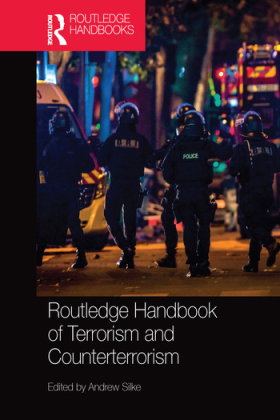
This new Handbook provides a comprehensive, state-of-the-art overview of current knowledge and debates on terrorism and counterterrorism, as well as providing a benchmark for future research.
The attacks of 9/11 and the 'global war on terror' and its various legacies have dominated international politics in the opening decades of the 21st century. In response to the dramatic rise of terrorism, within the public eye and the academic world, the need for an accessible and comprehensive overview of these controversial issues remains profound. The Routledge Handbook of Terrorism and Counterterrorism seeks to fulfil this need. The volume is divided into two key parts:
- Part I: Terrorism: This section provides an overview of terrorism, covering the history of terrorism, its causes and characteristics, major tactics and strategies, major trends and critical contemporary issues such as radicalisation and cyber-terrorism. It concludes with a series of detailed case studies, including the IRA, Hamas and Islamic State.
- Part II: Counterterrorism: This part draws on the main themes and critical issues surrounding counterterrorism. It covers the major strategies and policies, key events and trends and the impact and effectiveness of different approaches. This section also concludes with a series of case studies focused on major counterterrorism campaigns.
This book will be of great interest to all students of terrorism and counterterrorism, political violence, counter-insurgency, criminology, war and conflict studies, security studies and IR more generally.