






Diese Website verwendet Cookies und ähnliche Technologien. Dabei handelt es sich um kleine Textdateien, die auf eurem Computer gespeichert und ausgelesen werden. Indem ihr auf "Alles akzeptieren" klickt, stimmt ihr der Verarbeitung von Daten, der Erstellung und Verarbeitung von individuellen Nutzungsprofilen über Websites und über Partner und Geräte hinweg sowie der Übermittlung eurer Daten an Drittanbieter zu, die eure Daten teilweise in Ländern außerhalb der Europäischen Union verarbeiten (GDPR Art. 49). Einzelheiten hierzu findet ihr in den Datenschutzhinweisen. Die Daten werden für Analysen und für eigene Zwecke Dritter verwendet. Weitere Informationen, auch über die Datenverarbeitung durch Drittanbieter und die Möglichkeit des Widerrufs, findet ihr in den Einstellungen und in unseren Datenschutzhinweisen. Hier könnt ihr mit den notwendigen Tools fortfahren.
- Verlag: Taylor & Francis
- Autor: Arkadiusz Michal Kowalski
- Artikel-Nr.: KNV96360214
- ISBN: 9781032057606
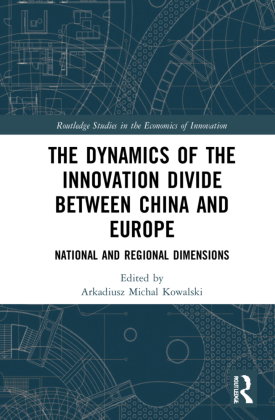
This book examines the problem of the innovation divide in the world economy, and convergence in innovation performance between leaders and followers, analysed through the prism of Chinese experiences, and explored from an European Union (EU) perspective. The rationale for research conducted in this book is an observation of a significant change in the geography of world innovation, reflected in the emergence of innovation hubs in developing countries and in the shift of manufacturing activity, including high and medium-high technology industries, to emerging economies, mainly China.
The book analyses the factors of Chinese innovation success in recent decades, such as: China's science, technology and innovation policy, increased R&D expenditures, human capital development and the development of clusters and highly specialized industries. It also focuses on the challenges for developed European economies, which are being at risk of losing their knowledge-related sources of competitive advantage. It also offers recommendations for future policy actions. The book's analysis goes beyond a cross-country comparison, taking into account a regional perspective. The reason for this regional dimension is the increasingly recognized importance of proximity in stimulating innovation processes, and an observed strong geographical polarization of innovation activity at specific regions seen in the emergence of clusters, particularly visible in China.
The monograph will provide an up-to-date reference for academics and students across a variety of disciplines. It will be of particular interest to researchers in the area of innovation and practitioners doing business in China, as well as policymakers at international, national and regional levels involved in designing and implementing innovation policy.