






Diese Website verwendet Cookies und ähnliche Technologien. Dabei handelt es sich um kleine Textdateien, die auf eurem Computer gespeichert und ausgelesen werden. Indem ihr auf "Alles akzeptieren" klickt, stimmt ihr der Verarbeitung von Daten, der Erstellung und Verarbeitung von individuellen Nutzungsprofilen über Websites und über Partner und Geräte hinweg sowie der Übermittlung eurer Daten an Drittanbieter zu, die eure Daten teilweise in Ländern außerhalb der Europäischen Union verarbeiten (GDPR Art. 49). Einzelheiten hierzu findet ihr in den Datenschutzhinweisen. Die Daten werden für Analysen und für eigene Zwecke Dritter verwendet. Weitere Informationen, auch über die Datenverarbeitung durch Drittanbieter und die Möglichkeit des Widerrufs, findet ihr in den Einstellungen und in unseren Datenschutzhinweisen. Hier könnt ihr mit den notwendigen Tools fortfahren.
- Verlag: Taylor & Francis
- Autor: Julia Martínez-Ariño
- Artikel-Nr.: KNV96363993
- ISBN: 9780367696931
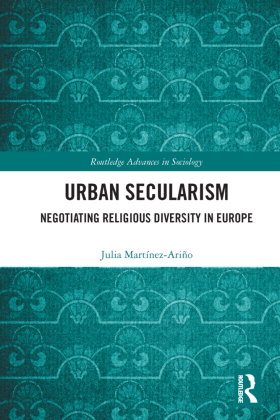
While French laïcité is often considered something fixed, its daily deployment is rather messy. What might we learn if we study the governance of religion from a dynamic bottom-up perspective? Using an ethnographic approach, this book examines everyday secularism in the making. How do city actors understand, frame and govern religious diversity? Which local factors play a role in those processes? In Urban Secularism: Negotiating Religious Diversity in Europe, Julia Martínez-Ariño brings the reader closer to the entrails of laïcité. She provides detailed accounts of the ways religious groups, city officials, municipal employees, secularist actors and other civil-society organisations negotiate concrete public expressions of religion.
Drawing on rich empirical material, the book demonstrates that urban actors draw and (re-)produce dichotomies of inclusion and exclusion, and challenge static conceptions of laïcité and the nation. Illustrating how urban, national and international contexts interact with one another, the book provides researchers with a deeper understanding of the multilevel governance of religious diversity.