






Diese Website verwendet Cookies und ähnliche Technologien. Dabei handelt es sich um kleine Textdateien, die auf eurem Computer gespeichert und ausgelesen werden. Indem ihr auf "Alles akzeptieren" klickt, stimmt ihr der Verarbeitung von Daten, der Erstellung und Verarbeitung von individuellen Nutzungsprofilen über Websites und über Partner und Geräte hinweg sowie der Übermittlung eurer Daten an Drittanbieter zu, die eure Daten teilweise in Ländern außerhalb der Europäischen Union verarbeiten (GDPR Art. 49). Einzelheiten hierzu findet ihr in den Datenschutzhinweisen. Die Daten werden für Analysen und für eigene Zwecke Dritter verwendet. Weitere Informationen, auch über die Datenverarbeitung durch Drittanbieter und die Möglichkeit des Widerrufs, findet ihr in den Einstellungen und in unseren Datenschutzhinweisen. Hier könnt ihr mit den notwendigen Tools fortfahren.
- Verlag: Taylor & Francis
- Autor: Alexa Weik von Mossner
- Artikel-Nr.: KNV96363983
- ISBN: 9781032198538
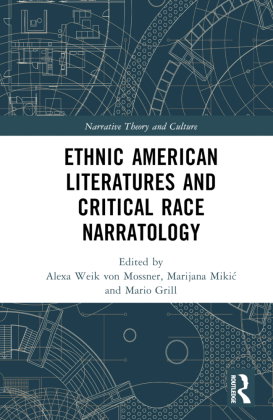
Ethnic American Literatures and Critical Race Narratology explores the relationship between narrative, race, and ethnicity in the United States. Situated at the intersection of post-classical narratology and context-oriented approaches in race, ethnic, and cultural studies, the contributions to this edited volume interrogate the complex and varied ways in which ethnic American authors use narrative form to engage readers in issues related to race and ethnicity, along with other important identity markers such as class, religion, gender, and sexuality. Importantly, the book also explores how paying attention to the formal features of ethnic American literatures changes our under-standing of narrative theory and how narrative theories can help us to think about author functions and race. The international and diverse group of contributors includes top scholars in narrative theory and in race and ethnic studies, and the texts they analyze concern a wide variety of topics, from the representation of time and space to the narration of trauma and other deeply emotional memories to the importance of literary paratexts, genre structures, and author functions.