






Diese Website verwendet Cookies und ähnliche Technologien. Dabei handelt es sich um kleine Textdateien, die auf eurem Computer gespeichert und ausgelesen werden. Indem ihr auf "Alles akzeptieren" klickt, stimmt ihr der Verarbeitung von Daten, der Erstellung und Verarbeitung von individuellen Nutzungsprofilen über Websites und über Partner und Geräte hinweg sowie der Übermittlung eurer Daten an Drittanbieter zu, die eure Daten teilweise in Ländern außerhalb der Europäischen Union verarbeiten (GDPR Art. 49). Einzelheiten hierzu findet ihr in den Datenschutzhinweisen. Die Daten werden für Analysen und für eigene Zwecke Dritter verwendet. Weitere Informationen, auch über die Datenverarbeitung durch Drittanbieter und die Möglichkeit des Widerrufs, findet ihr in den Einstellungen und in unseren Datenschutzhinweisen. Hier könnt ihr mit den notwendigen Tools fortfahren.
- Verlag: Taylor & Francis
- Autor: Azirah Hashim
- Artikel-Nr.: KNV96363975
- ISBN: 9780367618445
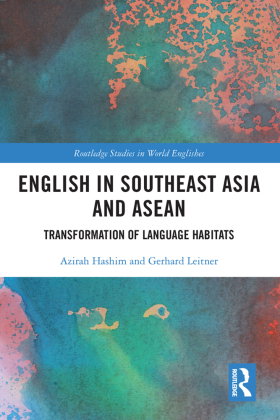
English in Southeast Asia and ASEAN embeds English in its various regional Southeast Asian and political ASEAN language habitats. Addressing the history, developmental stages and contacts with other languages, it provides in-depth information on the region and its political organization. In doing so, it analyzes the geo-political division of the region between former Anglophone and non-Anglophone colonies and shows that this distinction has led to considerable differences in the status and texture of English. This analysis includes the role and impact of American English in mainland and maritime Southeast Asia to highlight the linguistic properties of English and its linguistic and sociopolitical development, English used in specific domains, language policies and concludes with the future of English and future challenges. This book therefore provides an integrative survey of the various roles of English in ASEAN member states and studies the transformation of entire language habitats, including the major national and regional languages that participate in this process. It also explains how new societies emerge with their conflicting identities and their aspirations to act regionally or even globally and is a valuable resource for scholars and students in the fields of World Englishes, Asian Studies and those interested in language contact, policy and planning.