






Diese Website verwendet Cookies und ähnliche Technologien. Dabei handelt es sich um kleine Textdateien, die auf eurem Computer gespeichert und ausgelesen werden. Indem ihr auf "Alles akzeptieren" klickt, stimmt ihr der Verarbeitung von Daten, der Erstellung und Verarbeitung von individuellen Nutzungsprofilen über Websites und über Partner und Geräte hinweg sowie der Übermittlung eurer Daten an Drittanbieter zu, die eure Daten teilweise in Ländern außerhalb der Europäischen Union verarbeiten (GDPR Art. 49). Einzelheiten hierzu findet ihr in den Datenschutzhinweisen. Die Daten werden für Analysen und für eigene Zwecke Dritter verwendet. Weitere Informationen, auch über die Datenverarbeitung durch Drittanbieter und die Möglichkeit des Widerrufs, findet ihr in den Einstellungen und in unseren Datenschutzhinweisen. Hier könnt ihr mit den notwendigen Tools fortfahren.
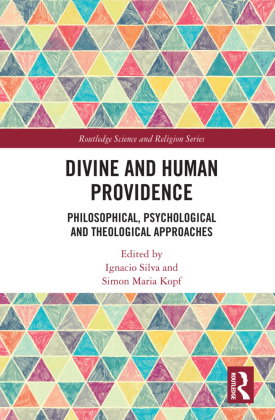
- Verlag: Taylor & Francis
- Autor: Ignacio Silva
- Artikel-Nr.: KNV96363960
- ISBN: 9780367632267
This volume offers an original perspective on divine providence by examining philosophical, psychological, and theological perspectives on human providence as exhibited in virtuous human behaviours. Divine providence is one of the most pressing issues in analytic theology and philosophy of religion today, especially in view of scientific evidence for a natural world full of indeterminacies and contingencies. Therefore, we need new ways to understand and explain the relations of divine providence and creaturely action.
The volume is structured dynamically, going from chapters on human providence to those on divine providence, and back. Drawing on insights from virtue ethics, psychology and cognitive science, the philosophy of providence in the face of contingent events, and the theology of grace, each chapter contributes to an original overall perspective: that human providential action is a resource suited specifically to personal action and hence related to the purported providential action of a personal God.
By putting forward a fresh take on divine providence, this book enters new territory on an age-old issue. It will therefore be of great interest to scholars of theology and philosophy.