






Diese Website verwendet Cookies und ähnliche Technologien. Dabei handelt es sich um kleine Textdateien, die auf eurem Computer gespeichert und ausgelesen werden. Indem ihr auf "Alles akzeptieren" klickt, stimmt ihr der Verarbeitung von Daten, der Erstellung und Verarbeitung von individuellen Nutzungsprofilen über Websites und über Partner und Geräte hinweg sowie der Übermittlung eurer Daten an Drittanbieter zu, die eure Daten teilweise in Ländern außerhalb der Europäischen Union verarbeiten (GDPR Art. 49). Einzelheiten hierzu findet ihr in den Datenschutzhinweisen. Die Daten werden für Analysen und für eigene Zwecke Dritter verwendet. Weitere Informationen, auch über die Datenverarbeitung durch Drittanbieter und die Möglichkeit des Widerrufs, findet ihr in den Einstellungen und in unseren Datenschutzhinweisen. Hier könnt ihr mit den notwendigen Tools fortfahren.
- Verlag: Taylor & Francis
- Autor: Virginie Iché
- Artikel-Nr.: KNV96360174
- ISBN: 9780367555634
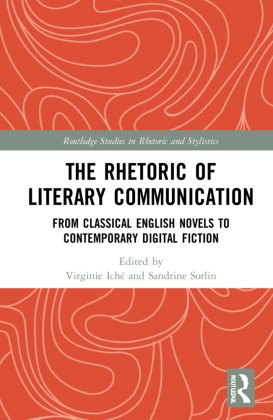
Building on the notion of fiction as communicative act, this collection brings together an interdisciplinary range of scholars to examine the evolving relationship between authors and readers in fictional works from 18th-century English novels through to contemporary digital fiction.
The book showcases a diverse range of contributions from scholars in stylistics, rhetoric, pragmatics, and literary studies to offer new ways of looking at the "author-reader channel," drawing on work from Roger Sell, Jean-Jacques Lecercle, and James Phelan. The volume traces the evolution of its form across historical periods, genres, and media, from its origins in the conversational mode of direct address in 18th-century English novels to the use of second-person narratives in the 20th century through to 21st-century digital fiction with its implicit requirement for reader participation. The book engages in questions of how the author-reader channel is shaped by different forms, and how this continues to evolve in emerging contemporary genres and of shifting ethics of author and reader involvement.
This book will be of particular interest to students and scholars interested in the intersection of pragmatics, stylistics, and literary studies.