






Diese Website verwendet Cookies und ähnliche Technologien. Dabei handelt es sich um kleine Textdateien, die auf eurem Computer gespeichert und ausgelesen werden. Indem ihr auf "Alles akzeptieren" klickt, stimmt ihr der Verarbeitung von Daten, der Erstellung und Verarbeitung von individuellen Nutzungsprofilen über Websites und über Partner und Geräte hinweg sowie der Übermittlung eurer Daten an Drittanbieter zu, die eure Daten teilweise in Ländern außerhalb der Europäischen Union verarbeiten (GDPR Art. 49). Einzelheiten hierzu findet ihr in den Datenschutzhinweisen. Die Daten werden für Analysen und für eigene Zwecke Dritter verwendet. Weitere Informationen, auch über die Datenverarbeitung durch Drittanbieter und die Möglichkeit des Widerrufs, findet ihr in den Einstellungen und in unseren Datenschutzhinweisen. Hier könnt ihr mit den notwendigen Tools fortfahren.
- Verlag: Taylor & Francis
- Autor: Lucia Velotti
- Artikel-Nr.: KNV96363942
- ISBN: 9781032035192
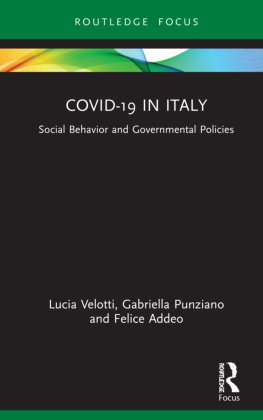
As the COVID-19 crisis began to take shape, all eyes were on Italy, the first Western country to attempt a response to the deadly pandemic. For institutional decision makers and average citizens alike, it was a time of deep uncertainty. As scientists struggled to understand the nature of the virus and how it spread, the gradualness with which information became available caused only deeper uncertainty, as did the inevitable disagreements over which protective actions the government should put in place. Despite some initial delay in its response, the Italian government eventually implemented a nationwide lockdown, which helped control the spread of the disease but simultaneously created unintended consequences for vulnerable populations, like small business owners, women, the elderly, and workers living paycheck to paycheck.
Drawing on data surveys conducted during the transition between the first lockdown and staged reopening, this book examines people's risk perception and their willingness to trust the sources and channels of information that were available to them. It also looks at their attitudes toward the protective behaviors they were asked to adopt and the ways in which their own cultural worldviews impacted their support for pandemic response policies. With remarkable depth and candor, respondents reflected on what a post-COVID-19 Italy might look like, filling out the book with the hopes and fears of real people who had stared death in the face and lived to tell about it. The book looks ahead to possibilities for future research, policy, and practice. COVID-19 in Italy elaborates and tests several aspects of the Protective Action Decision Model (PADM) in the Italian context, introducing the concept of ontological security and insecurity as an explanatory change factor to help interpret the Italian experience of responding to COVID-19.