






Diese Website verwendet Cookies und ähnliche Technologien. Dabei handelt es sich um kleine Textdateien, die auf eurem Computer gespeichert und ausgelesen werden. Indem ihr auf "Alles akzeptieren" klickt, stimmt ihr der Verarbeitung von Daten, der Erstellung und Verarbeitung von individuellen Nutzungsprofilen über Websites und über Partner und Geräte hinweg sowie der Übermittlung eurer Daten an Drittanbieter zu, die eure Daten teilweise in Ländern außerhalb der Europäischen Union verarbeiten (GDPR Art. 49). Einzelheiten hierzu findet ihr in den Datenschutzhinweisen. Die Daten werden für Analysen und für eigene Zwecke Dritter verwendet. Weitere Informationen, auch über die Datenverarbeitung durch Drittanbieter und die Möglichkeit des Widerrufs, findet ihr in den Einstellungen und in unseren Datenschutzhinweisen. Hier könnt ihr mit den notwendigen Tools fortfahren.
- Verlag: Taylor & Francis
- Autor: Jonathan Whelan
- Artikel-Nr.: KNV96360271
- ISBN: 9781032337111
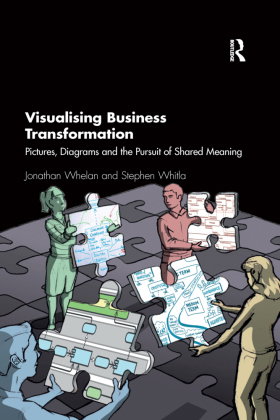
Business transformation typically involves a wide range of visualisation techniques, from the templates and diagrams used by managers to make better strategic choices, to the experience maps used by designers to understand customer needs, the technical models used by architects to propose possible solutions, and the pictorial representations used by change managers to engage stakeholder groups in dialogue. Up until now these approaches have always been dealt with in isolation, in the literature as well as in practice. This is surprising, because although they can look very different, and tend to be produced by distinct groups of people, they are all modelling different aspects of the same thing. Visualising Business Transformation draws them together for the first time into a coherent whole, so that readers from any background can expand their repertoire and understand the context and rationale for each technique across the transformation lifecycle. The book will appeal to a broad spectrum of readers involved in change, whether that is by creating change models themselves (strategists, architects, designers, engineers, business analysts, developers, illustrators, graphic facilitators, etc.), interpreting and using them (sponsors, business change managers, portfolio/programme/project managers, communicators, change champions, etc.), or supporting those involved in change indirectly (trainers, coaches, mentors, higher education establishments and professional training facilities).