






Diese Website verwendet Cookies und ähnliche Technologien. Dabei handelt es sich um kleine Textdateien, die auf eurem Computer gespeichert und ausgelesen werden. Indem ihr auf "Alles akzeptieren" klickt, stimmt ihr der Verarbeitung von Daten, der Erstellung und Verarbeitung von individuellen Nutzungsprofilen über Websites und über Partner und Geräte hinweg sowie der Übermittlung eurer Daten an Drittanbieter zu, die eure Daten teilweise in Ländern außerhalb der Europäischen Union verarbeiten (GDPR Art. 49). Einzelheiten hierzu findet ihr in den Datenschutzhinweisen. Die Daten werden für Analysen und für eigene Zwecke Dritter verwendet. Weitere Informationen, auch über die Datenverarbeitung durch Drittanbieter und die Möglichkeit des Widerrufs, findet ihr in den Einstellungen und in unseren Datenschutzhinweisen. Hier könnt ihr mit den notwendigen Tools fortfahren.
- Verlag: Taylor & Francis
- Autor: Domenico Amirante
- Artikel-Nr.: KNV96360269
- ISBN: 9781032007175
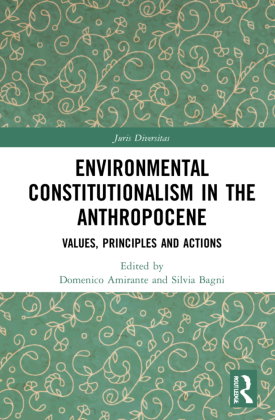
This book examines the relationship between man and nature through different cultural approaches to encourage new environmental legislation as a means of fostering acceptance at a local level.
In 2019, the International Union of Geological Sciences (IUGS) recognised that we have entered a new era, the Anthropocene, specifically characterised by the impact of one species, mankind, on environmental change. The Anthropocene is penetrating the discourse of both hard sciences and humanities and social sciences, by posing new epistemological as well as practical challenges to many disciplines. Legal sciences have so far been at the margins of this intellectual renewal, with few contributions on the central role that the notion of Anthropocene could play in forging a more effective and just environmental law. By applying a multidisciplinary approach and adopting a Law as Culture paradigm to the study of law, this book explores new paths of investigation and possible solutions to be applied. New perspectives for the constitutional framing of environmental policies, rights, and alternative methods for bottom-up participatory law-making and conflict resolution are investigated, showing that environmental justice is not just an option, but an objective within reach.
The book will be essential reading for students, academics, and policymakers in the areas of law, environmental studies and anthropology.