






Diese Website verwendet Cookies und ähnliche Technologien. Dabei handelt es sich um kleine Textdateien, die auf eurem Computer gespeichert und ausgelesen werden. Indem ihr auf "Alles akzeptieren" klickt, stimmt ihr der Verarbeitung von Daten, der Erstellung und Verarbeitung von individuellen Nutzungsprofilen über Websites und über Partner und Geräte hinweg sowie der Übermittlung eurer Daten an Drittanbieter zu, die eure Daten teilweise in Ländern außerhalb der Europäischen Union verarbeiten (GDPR Art. 49). Einzelheiten hierzu findet ihr in den Datenschutzhinweisen. Die Daten werden für Analysen und für eigene Zwecke Dritter verwendet. Weitere Informationen, auch über die Datenverarbeitung durch Drittanbieter und die Möglichkeit des Widerrufs, findet ihr in den Einstellungen und in unseren Datenschutzhinweisen. Hier könnt ihr mit den notwendigen Tools fortfahren.
- Verlag: Taylor & Francis
- Autor: Michele Riccardi
- Artikel-Nr.: KNV96360229
- ISBN: 9781032080871
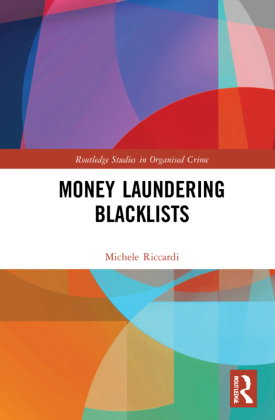
What are the criteria used by Financial Action Task Force (FATF) and the European Union to blacklist jurisdictions at high-risk of money laundering? What are the countries at highest risk according to Panama Papers and FinCEN files? Where do criminals move their illicit money, according to judicial and investigative evidence? This book answers these questions. It is an unprecedented study on the countries at highest risk of attracting money laundering and organised crime proceeds - and how they are identified as such by scholars, policy-makers and anti-money laundering (AML) practitioners. It targets an issue which is central to the policy debate, in the media, but is under-studied.
This book is divided into two parts. Part I discusses the concept of money laundering risk, its main determinants, and carries out a review of extant country ratings, ranging from official blacklists and grey lists, to media leaks and scholarly papers. Part II discusses the weaknesses and the myths behind the current ratings and proposes a new approach to assess the risk of money laundering across countries.
With a critical research perspective, empirically driven, this book aims to satisfy both scholars and students - in particular from criminology, economics, and international relations - and practitioners from banks, professional firms, and AML authorities.