






Diese Website verwendet Cookies und ähnliche Technologien. Dabei handelt es sich um kleine Textdateien, die auf eurem Computer gespeichert und ausgelesen werden. Indem ihr auf "Alles akzeptieren" klickt, stimmt ihr der Verarbeitung von Daten, der Erstellung und Verarbeitung von individuellen Nutzungsprofilen über Websites und über Partner und Geräte hinweg sowie der Übermittlung eurer Daten an Drittanbieter zu, die eure Daten teilweise in Ländern außerhalb der Europäischen Union verarbeiten (GDPR Art. 49). Einzelheiten hierzu findet ihr in den Datenschutzhinweisen. Die Daten werden für Analysen und für eigene Zwecke Dritter verwendet. Weitere Informationen, auch über die Datenverarbeitung durch Drittanbieter und die Möglichkeit des Widerrufs, findet ihr in den Einstellungen und in unseren Datenschutzhinweisen. Hier könnt ihr mit den notwendigen Tools fortfahren.
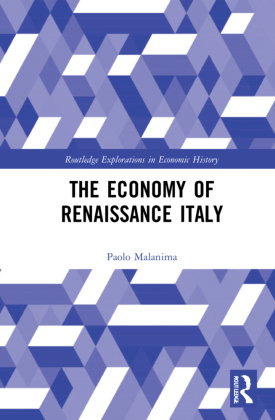
- Verlag: Taylor & Francis
- Autor: Paolo Malanima
- Artikel-Nr.: KNV96360231
- ISBN: 9780367677749
Drawing on a wide range of literature and adopting a macroeconomic approach, this book provides a comprehensive overview of the Italian economy during the Renaissance, focusing on the period between 1348, the year of the Black Death, and 1630.
The Italian Renaissance played a crucial role in the formation of the modern world, with developments in culture, art, politics, philosophy, and science sitting alongside, and overlapping with, significant changes in production, forms of organization, trades, finance, agriculture, and population. Yet, it is usually argued that splendour in culture coexisted with economic depression and that the modernity of Renaissance culture coincided with an epoch of epidemics, famines, economic crisis, poverty, and destitution. This book examines both faces of the Italian economy during the Renaissance, showing that capital per worker was plentiful and productive capacity and incomes were relatively high. The endemic presence of the plague, curbing population growth, played an important role in this. It is also shown that the organization of production in industry and finance, consumerism, human capital, and mercantile rationality were the forerunners of modern-day capitalism.
This book is an invaluable resource for scholars and students of the Renaissance and Italian economic history.