






Diese Website verwendet Cookies und ähnliche Technologien. Dabei handelt es sich um kleine Textdateien, die auf eurem Computer gespeichert und ausgelesen werden. Indem ihr auf "Alles akzeptieren" klickt, stimmt ihr der Verarbeitung von Daten, der Erstellung und Verarbeitung von individuellen Nutzungsprofilen über Websites und über Partner und Geräte hinweg sowie der Übermittlung eurer Daten an Drittanbieter zu, die eure Daten teilweise in Ländern außerhalb der Europäischen Union verarbeiten (GDPR Art. 49). Einzelheiten hierzu findet ihr in den Datenschutzhinweisen. Die Daten werden für Analysen und für eigene Zwecke Dritter verwendet. Weitere Informationen, auch über die Datenverarbeitung durch Drittanbieter und die Möglichkeit des Widerrufs, findet ihr in den Einstellungen und in unseren Datenschutzhinweisen. Hier könnt ihr mit den notwendigen Tools fortfahren.
- Verlag: Taylor & Francis
- Autor: Isabel Paterson
- Artikel-Nr.: KNV96360225
- ISBN: 9781560006664
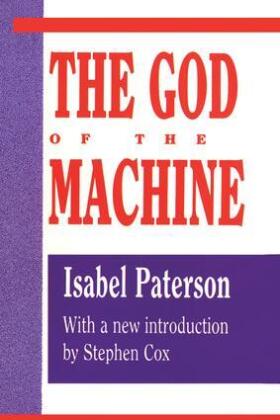
The God of the Machine presents an original theory of history and a bold defense of individualism as the source of moral and political progress. When it was published in 1943, Isabel Paterson's work provided fresh intellectual support for the endangered American belief in individual rights, limited government, and economic freedom. The crisis of today's collectivized nations would not have surprised Paterson; in The God of the Machine, she had explored the reasons for collectivism's failure. Her book placed her in the vanguard of the free-enterprise movement now sweeping the world.
Paterson sees the individual creative mind as the dynamo of history, and respect for the individual's God-given rights as the precondition for the enormous release of energy that produced the modern world. She sees capitalist institutions as the machinery through which human energy works, and government as a device properly used merely to cut off power to activities that threaten personal liberty.
Paterson applies her general theory to particular issues in contemporary life, such as education, .social welfare, and the causes of economic distress. She severely criticizes all but minimal application of government, including governmental interventions that most people have long taken for granted. The God of the Machine offers a challenging perspective on the continuing, worldwide debate about the nature of freedom, the uses of power, and the prospects of human betterment.
Stephen Cox's substantial introduction to The God of the Machine is a comprehensive and enlightening account of Paterson's colorful life and work. He describes The God of the Machine as "not just theory, but rhapsody, satire, diatribe, poetic narrative." Paterson's work continues to be relevant because "it exposes the moral and practical failures of collectivism, failures that are now almost universally acknowledged but are still far from universally understood." The book will be essential to students of American history, political theory, and literature.