






Diese Website verwendet Cookies und ähnliche Technologien. Dabei handelt es sich um kleine Textdateien, die auf eurem Computer gespeichert und ausgelesen werden. Indem ihr auf "Alles akzeptieren" klickt, stimmt ihr der Verarbeitung von Daten, der Erstellung und Verarbeitung von individuellen Nutzungsprofilen über Websites und über Partner und Geräte hinweg sowie der Übermittlung eurer Daten an Drittanbieter zu, die eure Daten teilweise in Ländern außerhalb der Europäischen Union verarbeiten (GDPR Art. 49). Einzelheiten hierzu findet ihr in den Datenschutzhinweisen. Die Daten werden für Analysen und für eigene Zwecke Dritter verwendet. Weitere Informationen, auch über die Datenverarbeitung durch Drittanbieter und die Möglichkeit des Widerrufs, findet ihr in den Einstellungen und in unseren Datenschutzhinweisen. Hier könnt ihr mit den notwendigen Tools fortfahren.
- Verlag: Taylor & Francis
- Autor: Michanne Steenbergen
- Artikel-Nr.: KNV96360788
- ISBN: 9781032160313
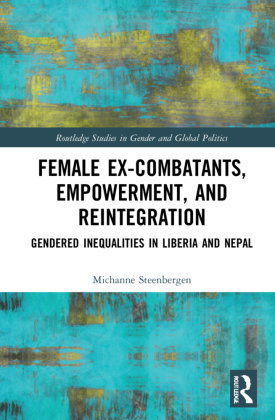
Female Ex-Combatants, Empowerment, and Reintegration investigates the role of United Nations-led Disarmament, Demobilization, and Reintegration (DDR) programs in undermining female ex-combatants' empowerment.
The participation of female combatants in conflict has increasingly been recognized in feminist literatures and in policies and programs concerned with reintegrating ex-combatants and building peace. This has illustrated that female ex-combatants often experience "empowerment" through their role as combatant; however, this empowerment is often lost upon reintegration. UN-led DDR plays an important role in the broader peacebuilding process, as it is one of the largest interventions and directly aims to reintegrate ex-combatants into civilian life. This book draws on extensive field research and interviews with female ex-combatants and DDR officials in Liberia and Nepal to develop a nuanced and comprehensive picture of female ex-combatants' empowerment and how this is undermined by DDR. Through reconceptualized frameworks of empowerment and an emancipatory peace, the book explores the pivotal role that DDR programs play in undermining female ex-combatants' empowerment. The author argues that this is detrimental to peacebuilding, because DDR officials and documentation narrate female ex-combatants in limited and gendered ways, which reproduces gendered inequalities and define how female ex-combatants should behave.
This book will be of great interest to scholars and practitioners working on gender, conflict, peace, security, and development.