






Diese Website verwendet Cookies und ähnliche Technologien. Dabei handelt es sich um kleine Textdateien, die auf eurem Computer gespeichert und ausgelesen werden. Indem ihr auf "Alles akzeptieren" klickt, stimmt ihr der Verarbeitung von Daten, der Erstellung und Verarbeitung von individuellen Nutzungsprofilen über Websites und über Partner und Geräte hinweg sowie der Übermittlung eurer Daten an Drittanbieter zu, die eure Daten teilweise in Ländern außerhalb der Europäischen Union verarbeiten (GDPR Art. 49). Einzelheiten hierzu findet ihr in den Datenschutzhinweisen. Die Daten werden für Analysen und für eigene Zwecke Dritter verwendet. Weitere Informationen, auch über die Datenverarbeitung durch Drittanbieter und die Möglichkeit des Widerrufs, findet ihr in den Einstellungen und in unseren Datenschutzhinweisen. Hier könnt ihr mit den notwendigen Tools fortfahren.
- Verlag: Taylor & Francis
- Autor: Lindsey Helen Bennett
- Artikel-Nr.: KNV96364440
- ISBN: 9780367524852
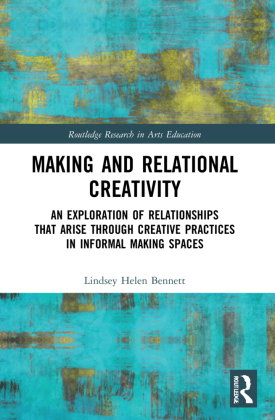
Making and Relational Creativity explores the developing relationships that arise between art teachers and students through creative practices outside of the secondary school arts curriculum. The author offers a powerful account of both her own and student experiences, exposing the complexities and problematic nature of creative practices emerging outside of the curriculum framework.
The book specifically explores relationships that develop in informal making spaces and argues for the significance of democratic creativity within art education. Examining the processes of making and the narratives arising within the A/R/Tography Collective, the lived experiences of both students and educator are revealed, providing a unique insight into their lives. The book explores the impact such spaces have on teachers' professional relationships with students together with the impact on student relationships and urges educators to inhabit a more holistic role and tailor their pedagogy to meet the needs of students. In addition, the research also aims to address the implications of informal making spaces for the school curriculum in England.
This book will be of great interest for postgraduate students, researchers, and academics in the field of arts education, democratic learning, teacher education, cultural and organisational studies.