






Diese Website verwendet Cookies und ähnliche Technologien. Dabei handelt es sich um kleine Textdateien, die auf eurem Computer gespeichert und ausgelesen werden. Indem ihr auf "Alles akzeptieren" klickt, stimmt ihr der Verarbeitung von Daten, der Erstellung und Verarbeitung von individuellen Nutzungsprofilen über Websites und über Partner und Geräte hinweg sowie der Übermittlung eurer Daten an Drittanbieter zu, die eure Daten teilweise in Ländern außerhalb der Europäischen Union verarbeiten (GDPR Art. 49). Einzelheiten hierzu findet ihr in den Datenschutzhinweisen. Die Daten werden für Analysen und für eigene Zwecke Dritter verwendet. Weitere Informationen, auch über die Datenverarbeitung durch Drittanbieter und die Möglichkeit des Widerrufs, findet ihr in den Einstellungen und in unseren Datenschutzhinweisen. Hier könnt ihr mit den notwendigen Tools fortfahren.
- Verlag: Taylor & Francis
- Autor: Everisto Benyera
- Artikel-Nr.: KNV96360780
- ISBN: 9781032212333
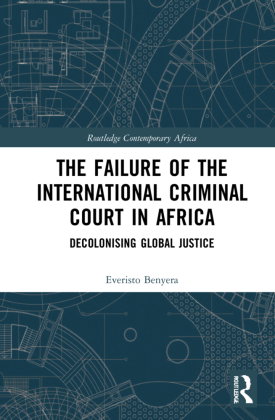
This book investigates the relationship between the International Criminal Court and Africa (the ICC or the Court), asking why and how the international criminal justice system has so far largely failed the victims of atrocities in Africa.
The book explores how the Court degenerated from a very promising multilateral institution to being an instrumentalised, politicised, weaponised institution that ended up with the victims being the greatest losers. Instead of looking at the International Criminal Court as a recent alternative to a prevailing international criminal justice paradigm, this book argues that the Court is a manifestation of the same world order that was established by the Reconquista in 1492. Written from a decolonial perspective, the book particularly draws on evidence from Zimbabwe in order to demonstrate how the International Criminal Court is failing the victims of the four crimes that fall under its jurisdiction. Drawing on the perspectives of victims in particular, this book highlights the damage caused within Africa by the international criminal justice system and argues for a decolonial conception of justice.
The book will be of interest to researchers from across African politics, international relations, law and criminal justice.