






Diese Website verwendet Cookies und ähnliche Technologien. Dabei handelt es sich um kleine Textdateien, die auf eurem Computer gespeichert und ausgelesen werden. Indem ihr auf "Alles akzeptieren" klickt, stimmt ihr der Verarbeitung von Daten, der Erstellung und Verarbeitung von individuellen Nutzungsprofilen über Websites und über Partner und Geräte hinweg sowie der Übermittlung eurer Daten an Drittanbieter zu, die eure Daten teilweise in Ländern außerhalb der Europäischen Union verarbeiten (GDPR Art. 49). Einzelheiten hierzu findet ihr in den Datenschutzhinweisen. Die Daten werden für Analysen und für eigene Zwecke Dritter verwendet. Weitere Informationen, auch über die Datenverarbeitung durch Drittanbieter und die Möglichkeit des Widerrufs, findet ihr in den Einstellungen und in unseren Datenschutzhinweisen. Hier könnt ihr mit den notwendigen Tools fortfahren.
- Verlag: Taylor & Francis
- Autor: Lisa de Rijk
- Artikel-Nr.: KNV96360773
- ISBN: 9781032057200
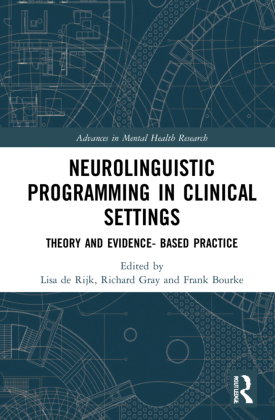
Neurolinguistic Programming in Clinical Settings provides a theoretical framework for the clinical applications of Neurolinguistic Programming (NLP) protocols in mental health. It offers evidence-based models for a range of conditions; including PTSD, anxiety and depression, grief, phobias, and binge-eating.
Providing a follow up to the 2014 book The Clinical Effectiveness of Neurolinguistic Programming, this book updates the existing research evidence for NLP interventions with mental health clinical conditions. It includes further evidence for its use with somatoform disorders, anxiety and depression, and as a general psychotherapy modality. The book outlines up-to-date evidence from clinical trials that demonstrate the success rate of NLP with PTSD populations and discusses how ongoing randomised clinical trials at Kings College London are demonstrating the clinical effectiveness of NLP protocols and are becoming more widely accepted by mainstream mental health care.
Written by a team of internationally academically informed clinicians and researchers, the book will be key reading for academics, researchers, and post-graduate students in the field of mental health research, psychotherapy, and counselling. It will also be of interest to clinicians and mental health professionals interested in NLP as a therapeutic modality.