






Diese Website verwendet Cookies und ähnliche Technologien. Dabei handelt es sich um kleine Textdateien, die auf eurem Computer gespeichert und ausgelesen werden. Indem ihr auf "Alles akzeptieren" klickt, stimmt ihr der Verarbeitung von Daten, der Erstellung und Verarbeitung von individuellen Nutzungsprofilen über Websites und über Partner und Geräte hinweg sowie der Übermittlung eurer Daten an Drittanbieter zu, die eure Daten teilweise in Ländern außerhalb der Europäischen Union verarbeiten (GDPR Art. 49). Einzelheiten hierzu findet ihr in den Datenschutzhinweisen. Die Daten werden für Analysen und für eigene Zwecke Dritter verwendet. Weitere Informationen, auch über die Datenverarbeitung durch Drittanbieter und die Möglichkeit des Widerrufs, findet ihr in den Einstellungen und in unseren Datenschutzhinweisen. Hier könnt ihr mit den notwendigen Tools fortfahren.
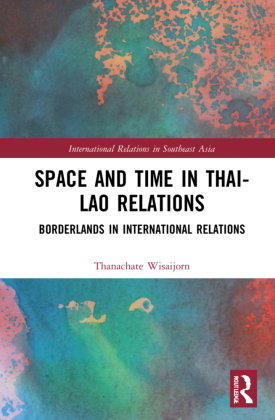
- Verlag: Taylor & Francis
- Autor: Thanachate Wisaijorn
- Artikel-Nr.: KNV96360760
- ISBN: 9781032191362
Wisaijorn explores how the concepts of space and temporality in traditional geopolitics have influenced the understanding of the Thai-Lao border since Laos became independent in 1954.
Arguing that a state-centric conceptualisation of the Thailand-Laos border falls into both a territorial and temporal trap, Wisaijorn contests that privileging a theoretical border silences the voices of people on the ground. In doing so, he expands the concept of a temporal trap with the addition of a temporal dimension - analysing how the state claims a monopoly not only on a geography, but also a history. Rooted in orientalism, colonialism and the expediencies of the Cold War, the border operates in the interest of elites and ignores the lived reality of peoples on the ground. By bringing these voices back into the discussion, Wisaijorn presents a more complex framework, which reveals a human dimension missing not only from this particular case, but more broadly from the conceptions of borders within International Relations theory.
A fascinating case study for scholars with an interest in mainland Southeast Asia, which also makes a valuable theoretical contribution to International relations discourse.