






Diese Website verwendet Cookies und ähnliche Technologien. Dabei handelt es sich um kleine Textdateien, die auf eurem Computer gespeichert und ausgelesen werden. Indem ihr auf "Alles akzeptieren" klickt, stimmt ihr der Verarbeitung von Daten, der Erstellung und Verarbeitung von individuellen Nutzungsprofilen über Websites und über Partner und Geräte hinweg sowie der Übermittlung eurer Daten an Drittanbieter zu, die eure Daten teilweise in Ländern außerhalb der Europäischen Union verarbeiten (GDPR Art. 49). Einzelheiten hierzu findet ihr in den Datenschutzhinweisen. Die Daten werden für Analysen und für eigene Zwecke Dritter verwendet. Weitere Informationen, auch über die Datenverarbeitung durch Drittanbieter und die Möglichkeit des Widerrufs, findet ihr in den Einstellungen und in unseren Datenschutzhinweisen. Hier könnt ihr mit den notwendigen Tools fortfahren.
- Verlag: Taylor & Francis
- Autor: Victor A. van Bijlert
- Artikel-Nr.: KNV96364429
- ISBN: 9780367540265
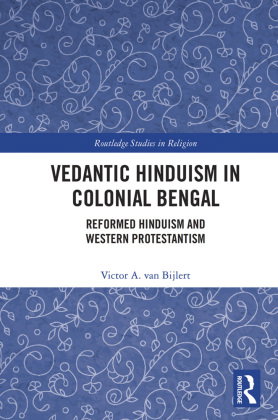
This book explores the ways in which modern Hindu identities were constructed in the early nineteenth century. It draws parallels between sixteenth and eventeenth Cecntury Protestantism and the rise of modernity in the West, and the Hindu reformation in the nineteenth century which contributed to the rise of Vedantic Hindu modernity discourse in India.
The nineteenth century Hindu modernity, it is argued, sought both individual flourishing and collective emancipation from Western domination. For the first time Hinduism began to be constructed as a religion of sacred texts. In particular, texts belonging to what could be loosely called Vedanta: Upanishads and the Bhagavad Gita. In this way, the main protagonists of this Vedantist modernity were imitating Western Protestantism, but at the same time also inventing totally novel interpretations of what it meant to be Hindu. The book traces the major ideological paths taken in this cultural-religious reformation from its originator Rammohun Roy up to its last major influence, Rabindranath Tagore.
Bringing these two versions of modernity into conversation brings a unique view on the formation of modern Hindu identities. It will, therefore, be of great interest to scholars of religious, Hindu and South Asian studies, as well as religious istory and interreligious dialogue.