






Diese Website verwendet Cookies und ähnliche Technologien. Dabei handelt es sich um kleine Textdateien, die auf eurem Computer gespeichert und ausgelesen werden. Indem ihr auf "Alles akzeptieren" klickt, stimmt ihr der Verarbeitung von Daten, der Erstellung und Verarbeitung von individuellen Nutzungsprofilen über Websites und über Partner und Geräte hinweg sowie der Übermittlung eurer Daten an Drittanbieter zu, die eure Daten teilweise in Ländern außerhalb der Europäischen Union verarbeiten (GDPR Art. 49). Einzelheiten hierzu findet ihr in den Datenschutzhinweisen. Die Daten werden für Analysen und für eigene Zwecke Dritter verwendet. Weitere Informationen, auch über die Datenverarbeitung durch Drittanbieter und die Möglichkeit des Widerrufs, findet ihr in den Einstellungen und in unseren Datenschutzhinweisen. Hier könnt ihr mit den notwendigen Tools fortfahren.
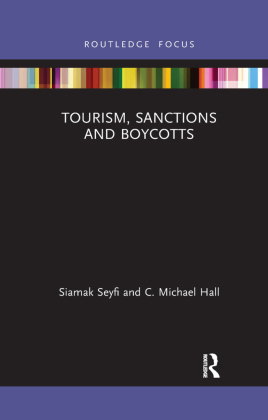
- Verlag: Taylor & Francis
- Autor: Siamak Seyfi
- Artikel-Nr.: KNV96364425
- ISBN: 9781032337715
This is the first book to provide a comprehensive account of sanctions and boycotts in tourism and the economic and ethical complexities that policy makers, tourists, tourism destinations, and businesses face.
Sanctions and boycotts are an important feature of the global tourism system and the emerging ethics of tourism. Sanctions and embargoes are increasingly used as coercive instruments of diplomacy and foreign policy by the United Nations, supranational organizations, the US, and other nations to change the actions and behaviors of countries, organizations, businesses, and individuals. At the same time, boycotts and buycotts are a growing feature of political consumerism and interest group activism. Tourism and hospitality destinations, attractions, and businesses can be profoundly affected by this, with the legacy of a negative image lasting for decades. International travel to some destinations may be severely restricted, financial investment and supply chains disrupted, and, in the most comprehensive sanctions and boycotts, substantial economic and personal hardship may be experienced.
This book is of interest not only to policy makers, destination management and marketing organizations, and students of crisis and politics in tourism and hospitality but also those who seek to address the interrelationships between sanctions, tourism destinations and attractions, and the tourists who boycott them.