






Diese Website verwendet Cookies und ähnliche Technologien. Dabei handelt es sich um kleine Textdateien, die auf eurem Computer gespeichert und ausgelesen werden. Indem ihr auf "Alles akzeptieren" klickt, stimmt ihr der Verarbeitung von Daten, der Erstellung und Verarbeitung von individuellen Nutzungsprofilen über Websites und über Partner und Geräte hinweg sowie der Übermittlung eurer Daten an Drittanbieter zu, die eure Daten teilweise in Ländern außerhalb der Europäischen Union verarbeiten (GDPR Art. 49). Einzelheiten hierzu findet ihr in den Datenschutzhinweisen. Die Daten werden für Analysen und für eigene Zwecke Dritter verwendet. Weitere Informationen, auch über die Datenverarbeitung durch Drittanbieter und die Möglichkeit des Widerrufs, findet ihr in den Einstellungen und in unseren Datenschutzhinweisen. Hier könnt ihr mit den notwendigen Tools fortfahren.
- Verlag: Taylor & Francis
- Autor: Sophie Chiari
- Artikel-Nr.: KNV96360749
- ISBN: 9781032225722
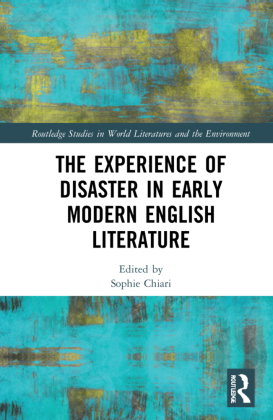
This book addresses the concept of 'disaster' through a variety of literary texts dating back to the early modern period. While Shakespeare's age, which was an era of colonisation, certainly marked a turning point in men and women's relations with nature, the present times seem to announce the advent of environmental justice in spite of the massive ecological destructions that have contributed to reshape our planet. Between then and now, a whole history of climatic disasters and of their artistic depictions needs to be traced. The literary representations of eco-catastrophes, in particular, have consistently fashioned the English identity and led to the progress of science and the 'advancement of learning'. They have also obliged us to adapt, recycle and innovate. How could the destructive process entailed by ecological disasters be represented on the page and thereby transformed into a creative process encouraging meditation, preservation and resilience in the sixteenth and seventeenth centuries? To this question, this book offers nuanced, contextualised and perceptive answers. Divided into three main sections 'Extreme Conditions', 'Tempestuous Skies', and 'Biblical Calamities,' it deals with the major environmental issues of our time through the prism of early modern culture and literature.