






Diese Website verwendet Cookies und ähnliche Technologien. Dabei handelt es sich um kleine Textdateien, die auf eurem Computer gespeichert und ausgelesen werden. Indem ihr auf "Alles akzeptieren" klickt, stimmt ihr der Verarbeitung von Daten, der Erstellung und Verarbeitung von individuellen Nutzungsprofilen über Websites und über Partner und Geräte hinweg sowie der Übermittlung eurer Daten an Drittanbieter zu, die eure Daten teilweise in Ländern außerhalb der Europäischen Union verarbeiten (GDPR Art. 49). Einzelheiten hierzu findet ihr in den Datenschutzhinweisen. Die Daten werden für Analysen und für eigene Zwecke Dritter verwendet. Weitere Informationen, auch über die Datenverarbeitung durch Drittanbieter und die Möglichkeit des Widerrufs, findet ihr in den Einstellungen und in unseren Datenschutzhinweisen. Hier könnt ihr mit den notwendigen Tools fortfahren.
- Verlag: Taylor & Francis
- Autor: Bernardo Ribeiro de Almeida
- Artikel-Nr.: KNV96360744
- ISBN: 9781032051703
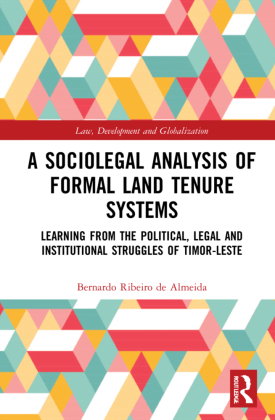
This sociolegal study focuses on the political, legal and institutional problems and dilemmas of regulating land tenure. By studying the development of the Timorese formal land tenure system, this book engages in the larger debate about the role of state systems in addressing and aggravating social problems such as insecurity, poverty, inequality, destruction of nature, and cultural and social estrangement.
Land tenure issues in Timor-Leste are complex and deeply shaped by the nation's history. Taking an insider's perspective based on the author's experience in Timorese state administration, and through the investigation of five analytical themes -political environment, lawmaking, legal framework, institutional framework, and social relationships and practices- this book studies the development of the Timorese formal land tenure system from independence in 2002 to 2018. It shows how political, legal, and administrative decisions on land administration are made, what and who influences them, which problems and dilemmas emerge, and how the formal system works in practice. The result is a portrait of a young nation grappling with the enormous task of creating a land tenure system that can address the needs of its citizens in the wake of centuries of socio-political tumult and huge fluctuations in resources. The book concludes by highlighting the importance of lawmaking and how abuses of power can be curbed by adequate administrative processes and laws. Finally, it argues that land administration is primarily a political matter. The political dimension of technical solutions must be considered if we aim to achieve fairer formal land tenure systems.
The pertinence of the topics covered, the multi-disciplinary perspective, and the research methodology followed make this book appealing to a variety of readers, including international organizations, practitioners, academics and students engaged in land administration, post-colonial and -conflict issues, lawmaking, rule of law, public administration and issues of access and exclusion.