






Diese Website verwendet Cookies und ähnliche Technologien. Dabei handelt es sich um kleine Textdateien, die auf eurem Computer gespeichert und ausgelesen werden. Indem ihr auf "Alles akzeptieren" klickt, stimmt ihr der Verarbeitung von Daten, der Erstellung und Verarbeitung von individuellen Nutzungsprofilen über Websites und über Partner und Geräte hinweg sowie der Übermittlung eurer Daten an Drittanbieter zu, die eure Daten teilweise in Ländern außerhalb der Europäischen Union verarbeiten (GDPR Art. 49). Einzelheiten hierzu findet ihr in den Datenschutzhinweisen. Die Daten werden für Analysen und für eigene Zwecke Dritter verwendet. Weitere Informationen, auch über die Datenverarbeitung durch Drittanbieter und die Möglichkeit des Widerrufs, findet ihr in den Einstellungen und in unseren Datenschutzhinweisen. Hier könnt ihr mit den notwendigen Tools fortfahren.
- Verlag: Taylor & Francis
- Autor: Francesco Farri
- Artikel-Nr.: KNV96364419
- ISBN: 9780367544232
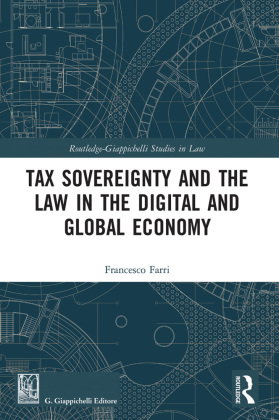
This book discusses which is the most appropriate tax dimension to best manage the new horizons of the global and digital economy.
In this perspective, the efficiency of the main models is examined and two fundamental proposals are put forth: the first one aims at a coordination of the Destination-Based approach with the role of some specific digital assets, such as user data; the second one is a framework for a possible futuristic tax phenomenon all internal to the world of the internet and not linked to traditional territorial States. The compliance of these models with the constitutional principles that western democratic systems have affirmed over time in matters of taxation is then analyzed with particular regard to legal certainty, consent to taxation and to the re-distributive function of taxes. A specific evaluation of the role of the European Union is carried out and the jurisprudence on financial interests of the Union and on State aids is analyzed and tackled in light of the Treaty on the Functioning of the European Union and of the tax sovereignty of member States. The conclusion is that the model of the organization with a general political purpose, from which modern States take their inspiration, appears unfailing for a tax project that would focus on the good and the growth of the person and of the social aggregations in which everyone lives. A model that therefore deserves to be safeguarded, although with new methods and instruments, starting from a Destination-Based Asset-Coordinated approach, in the Third Millennium.
The book will be of interest to researchers and academics in international tax law, constitutional law and in political science.