






Diese Website verwendet Cookies und ähnliche Technologien. Dabei handelt es sich um kleine Textdateien, die auf eurem Computer gespeichert und ausgelesen werden. Indem ihr auf "Alles akzeptieren" klickt, stimmt ihr der Verarbeitung von Daten, der Erstellung und Verarbeitung von individuellen Nutzungsprofilen über Websites und über Partner und Geräte hinweg sowie der Übermittlung eurer Daten an Drittanbieter zu, die eure Daten teilweise in Ländern außerhalb der Europäischen Union verarbeiten (GDPR Art. 49). Einzelheiten hierzu findet ihr in den Datenschutzhinweisen. Die Daten werden für Analysen und für eigene Zwecke Dritter verwendet. Weitere Informationen, auch über die Datenverarbeitung durch Drittanbieter und die Möglichkeit des Widerrufs, findet ihr in den Einstellungen und in unseren Datenschutzhinweisen. Hier könnt ihr mit den notwendigen Tools fortfahren.
- Verlag: Taylor & Francis
- Autor: Jerf W. K. Yeung
- Artikel-Nr.: KNV96364476
- ISBN: 9780367694784
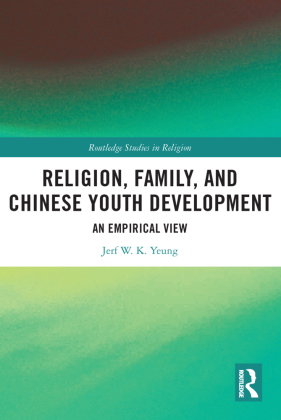
Religion is a fundamental cultural factor profoundly influential on human mental health and behavioural choices, and, in addition, family is the most proximal and intimate socialization agent contributive to youth development. Religion, Family, and Chinese Youth Development explores how religious involvement of Chinese parents affects their psychological health and family socialization, which leads to various aspects of the development of Chinese youths.
Specifically, a structural relationship between religion, family socialization, and youth development was constructed theoretically and tested empirically in the Chinese context, which can portray the linked lives of religious involvement of Chinese parents, parental psychological health, family processes, parenting practices, the development of psychosocial maturity, and the internalizing and externalizing outcomes of Chinese youths. Undeniably, the findings of this book provide insightful social and policy implications for researchers and human service practitioners related to Chinese societies.
By clearly depicting and empirically testing the connections between religion, family, and Chinese youth development, the book can be a reference for clergy, family practitioners, researchers, policy makers, management of NGOs, and graduate students of social sciences.