






Diese Website verwendet Cookies und ähnliche Technologien. Dabei handelt es sich um kleine Textdateien, die auf eurem Computer gespeichert und ausgelesen werden. Indem ihr auf "Alles akzeptieren" klickt, stimmt ihr der Verarbeitung von Daten, der Erstellung und Verarbeitung von individuellen Nutzungsprofilen über Websites und über Partner und Geräte hinweg sowie der Übermittlung eurer Daten an Drittanbieter zu, die eure Daten teilweise in Ländern außerhalb der Europäischen Union verarbeiten (GDPR Art. 49). Einzelheiten hierzu findet ihr in den Datenschutzhinweisen. Die Daten werden für Analysen und für eigene Zwecke Dritter verwendet. Weitere Informationen, auch über die Datenverarbeitung durch Drittanbieter und die Möglichkeit des Widerrufs, findet ihr in den Einstellungen und in unseren Datenschutzhinweisen. Hier könnt ihr mit den notwendigen Tools fortfahren.
- Verlag: Taylor & Francis
- Autor: Jutta Haider
- Artikel-Nr.: KNV96360849
- ISBN: 9780367756215
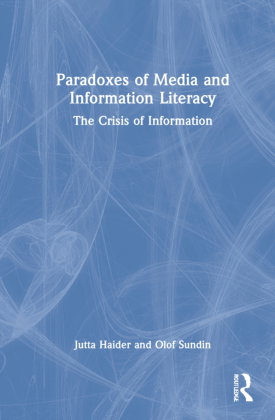
Questioning why MIL is commonly believed to wield such power, the book throws into sharp relief several paradoxes that are built into common understandings of such literacies. Haider and Sundin take the reader on a journey across different fields of practice, research and policymaking, including librarianship, information studies, teaching and journalism, media and communication and the educational sciences. The authors also consider national information policy proposals and the recommendations of NGOs or international bodies, such as UNESCO and the OECD. Showing that MIL plays an active role in contemporary controversies, such as those on climate change or vaccination, Haider and Sundin argue that such controversies challenge existing notions of fact and ignorance, trust and doubt, and our understanding of information access and information control. The book thus argues for the need to unpack and understand the contradictions forming around these notions in relation to MIL, rather than attempting to arrive at a single, comprehensive definition.
Paradoxes of Media and Information Literacy combines careful analytical and conceptual discussions with an in-depth understanding of information practices and of the contemporary information infrastructure. It is essential reading for scholars and students engaged in library and information studies, media and communication, journalism studies and the educational sciences.