






Diese Website verwendet Cookies und ähnliche Technologien. Dabei handelt es sich um kleine Textdateien, die auf eurem Computer gespeichert und ausgelesen werden. Indem ihr auf "Alles akzeptieren" klickt, stimmt ihr der Verarbeitung von Daten, der Erstellung und Verarbeitung von individuellen Nutzungsprofilen über Websites und über Partner und Geräte hinweg sowie der Übermittlung eurer Daten an Drittanbieter zu, die eure Daten teilweise in Ländern außerhalb der Europäischen Union verarbeiten (GDPR Art. 49). Einzelheiten hierzu findet ihr in den Datenschutzhinweisen. Die Daten werden für Analysen und für eigene Zwecke Dritter verwendet. Weitere Informationen, auch über die Datenverarbeitung durch Drittanbieter und die Möglichkeit des Widerrufs, findet ihr in den Einstellungen und in unseren Datenschutzhinweisen. Hier könnt ihr mit den notwendigen Tools fortfahren.
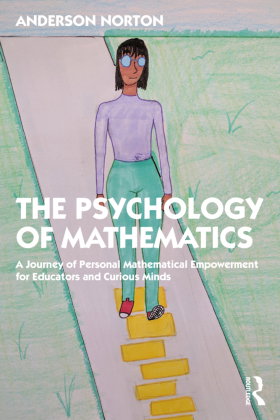
- Verlag: Taylor & Francis
- Autor: Anderson Norton
- Artikel-Nr.: KNV96360842
- ISBN: 9781032020693
This book offers an innovative introduction to the psychological basis of mathematics and the nature of mathematical thinking and learning, using an approach that empowers students by fostering their own construction of mathematical structures.
Through accessible and engaging writing, award-winning mathematician and educator Anderson Norton reframes mathematics as something that exists first in the minds of students, rather than something that exists first in a textbook. By exploring the psychological basis for mathematics at every level-including geometry, algebra, calculus, complex analysis, and more-Norton unlocks students' personal power to construct mathematical objects based on their own mental activity and illustrates the power of mathematics in organizing the world as we know it.
Including reflections and activities designed to inspire awareness of the mental actions and processes coordinated in practicing mathematics, the book is geared toward current and future secondary and elementary mathematics teachers who will empower the next generation of mathematicians and STEM majors. Those interested in the history and philosophy that underpins mathematics will also benefit from this book, as well as those informed and curious minds attentive to the human experience more generally.