






Diese Website verwendet Cookies und ähnliche Technologien. Dabei handelt es sich um kleine Textdateien, die auf eurem Computer gespeichert und ausgelesen werden. Indem ihr auf "Alles akzeptieren" klickt, stimmt ihr der Verarbeitung von Daten, der Erstellung und Verarbeitung von individuellen Nutzungsprofilen über Websites und über Partner und Geräte hinweg sowie der Übermittlung eurer Daten an Drittanbieter zu, die eure Daten teilweise in Ländern außerhalb der Europäischen Union verarbeiten (GDPR Art. 49). Einzelheiten hierzu findet ihr in den Datenschutzhinweisen. Die Daten werden für Analysen und für eigene Zwecke Dritter verwendet. Weitere Informationen, auch über die Datenverarbeitung durch Drittanbieter und die Möglichkeit des Widerrufs, findet ihr in den Einstellungen und in unseren Datenschutzhinweisen. Hier könnt ihr mit den notwendigen Tools fortfahren.
- Verlag: Taylor & Francis
- Autor: Thalia M. Mulvihill
- Artikel-Nr.: KNV96360831
- ISBN: 9780367649616
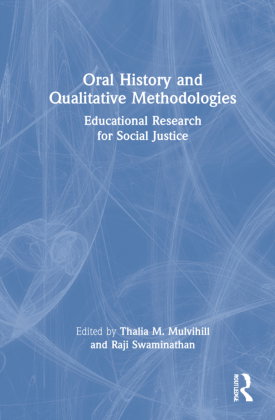
Oral History and Qualitative Methodologies: Educational Research for Social Justice examines oral history methodological processes involved in the doing of oral history as well as the theoretical, historical, and knowledge implications of using oral history for social justice projects.
Oral history in qualitative research is an umbrella term that integrates history, life history, and testimony accounts. Oral history draws from various social science disciplines, including educational studies, history, indigenous studies, sociology, anthropology, ethnic studies, women's studies, and youth studies. The book argues for the further development of a pedagogical culture related to oral history for educational research as part of the effort to diversify the range of human experiences educators, community members, and policy makers incorporate into knowledge-making and knowledge-using processes.
Early career researchers, novice researchers, as well as experienced researchers are invited to join social science educational researchers in developing their own oral history projects using all of the tools, dispositions, and epistemologies affiliated with qualitative inquiry.
The book will be of use in courses on qualitative research methods, history, anthropology, women's studies, and education disciplines as well as by community organizations who want to use oral history to preserve the history of communities and advance social justice projects.