






Diese Website verwendet Cookies und ähnliche Technologien. Dabei handelt es sich um kleine Textdateien, die auf eurem Computer gespeichert und ausgelesen werden. Indem ihr auf "Alles akzeptieren" klickt, stimmt ihr der Verarbeitung von Daten, der Erstellung und Verarbeitung von individuellen Nutzungsprofilen über Websites und über Partner und Geräte hinweg sowie der Übermittlung eurer Daten an Drittanbieter zu, die eure Daten teilweise in Ländern außerhalb der Europäischen Union verarbeiten (GDPR Art. 49). Einzelheiten hierzu findet ihr in den Datenschutzhinweisen. Die Daten werden für Analysen und für eigene Zwecke Dritter verwendet. Weitere Informationen, auch über die Datenverarbeitung durch Drittanbieter und die Möglichkeit des Widerrufs, findet ihr in den Einstellungen und in unseren Datenschutzhinweisen. Hier könnt ihr mit den notwendigen Tools fortfahren.
- Verlag: Taylor & Francis
- Autor: Erik Hollnagel
- Artikel-Nr.: KNV96360832
- ISBN: 9780367537210
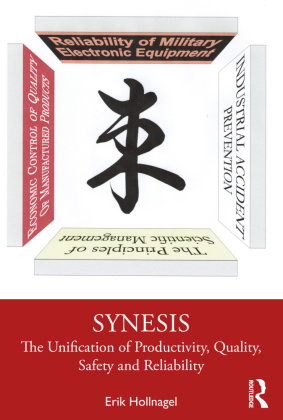
The complexity of today's large organisations, businesses, and social institutions defeats management approaches based on monolithic thinking. Most industry and service organisations look at their performance either from a single perspective - productivity, quality, safety, etc. - or from different but separate perspectives that reside in organisational silos. Quality is treated separately from safety, which, again, is treated separately from productivity, and so on. While siloed thinking may be convenient in the short term, it fails to recognise that any specific perspective reveals only a part of what goes on. Yet it is essential to have a unified view of how an organisation functions effectively to manage changes and to ensure the organisation excels in what it does.
Synesis represents the mutually dependent set of priorities, perspectives, and practices that an organisation needs to carry out its activities as intended. It shows how to overcome the fragmentation in foci, scope, and time that characterises the dominant change management paradigms. This book is consequently not about productivity or quality or safety or reliability but about all of these together. It is about why it is necessary to think of them as a whole. And it is about how this can be done in practice.