






Diese Website verwendet Cookies und ähnliche Technologien. Dabei handelt es sich um kleine Textdateien, die auf eurem Computer gespeichert und ausgelesen werden. Indem ihr auf "Alles akzeptieren" klickt, stimmt ihr der Verarbeitung von Daten, der Erstellung und Verarbeitung von individuellen Nutzungsprofilen über Websites und über Partner und Geräte hinweg sowie der Übermittlung eurer Daten an Drittanbieter zu, die eure Daten teilweise in Ländern außerhalb der Europäischen Union verarbeiten (GDPR Art. 49). Einzelheiten hierzu findet ihr in den Datenschutzhinweisen. Die Daten werden für Analysen und für eigene Zwecke Dritter verwendet. Weitere Informationen, auch über die Datenverarbeitung durch Drittanbieter und die Möglichkeit des Widerrufs, findet ihr in den Einstellungen und in unseren Datenschutzhinweisen. Hier könnt ihr mit den notwendigen Tools fortfahren.
- Verlag: Taylor & Francis
- Autor: Lorine Hughes
- Artikel-Nr.: KNV96364462
- ISBN: 9780367651671
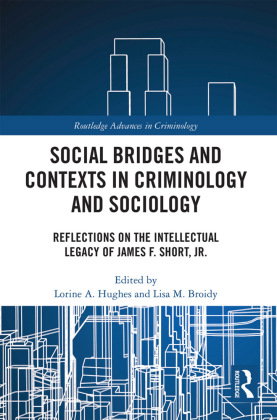
Social Bridges and Contexts in Criminology and Sociology brings together leading scholars to commemorate the illustrious career and enduring contributions of Professor James F. Short, Jr., to the social sciences. Although Professor Short is best known as a gang scholar, he was a bridging figure who advanced the study of human behavior across multiple domains.
Individual chapters document Professor Short's intellectual development and highlight the significance of his theoretical and empirical work in a range of specialty areas, including suicide and homicide, criminological theory, field and self-report survey research methodologies, white-collar crime, hazards and risks, levels of explanation, microsocial group processes, and the etiology of gang violence and delinquency. A special feature of this book is the collection of brief personal reflection essays appearing after the main chapters. Authored by Professor Short's students, colleagues, collaborators, and friends, these essays provide powerful testimonials of the influence of his intellectual legacy as well as his generous spirit and commitment to mentorship.
Written in a clear and direct style, this book will appeal to students and scholars of criminology and sociology, and all those interested in the important contributions of Professor James F. Short, Jr., to these subject areas.