






Diese Website verwendet Cookies und ähnliche Technologien. Dabei handelt es sich um kleine Textdateien, die auf eurem Computer gespeichert und ausgelesen werden. Indem ihr auf "Alles akzeptieren" klickt, stimmt ihr der Verarbeitung von Daten, der Erstellung und Verarbeitung von individuellen Nutzungsprofilen über Websites und über Partner und Geräte hinweg sowie der Übermittlung eurer Daten an Drittanbieter zu, die eure Daten teilweise in Ländern außerhalb der Europäischen Union verarbeiten (GDPR Art. 49). Einzelheiten hierzu findet ihr in den Datenschutzhinweisen. Die Daten werden für Analysen und für eigene Zwecke Dritter verwendet. Weitere Informationen, auch über die Datenverarbeitung durch Drittanbieter und die Möglichkeit des Widerrufs, findet ihr in den Einstellungen und in unseren Datenschutzhinweisen. Hier könnt ihr mit den notwendigen Tools fortfahren.
- Verlag: Taylor & Francis
- Autor: James Thompson
- Artikel-Nr.: KNV96364459
- ISBN: 9781032196169
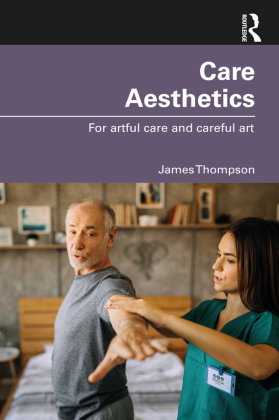
What if the work of a nurse, physio, or homecare worker was designated an art, so that the qualities of the experiences they create became understood as aesthetic qualities? What if the interactions created by artists, directors, dancers, or workshop facilitators were understood as works of care? Care Aesthetics is the first full-length book to explore these questions and examine the work of carer artists and artist carers to make the case for the importance of valuing and supporting aesthetically caring relations across multiple aspects of our lives.
Theoretically and practically, the book outlines the implications of care aesthetics for the socially engaged arts field and health and social care, and for acts of aesthetic care in the everyday. Part 1 of the book outlines the approaches to aesthetics and to care theory that are necessary to make and defend the concept of care aesthetics. Part 2 then tests this through practice, examining socially engaged arts and health and social care through its lens. It makes the case for careful art exploring the implications of care aesthetics for participatory or applied arts. Then it argues for artful care and how an aesthetic orientation to care practices might challenge some of the inadequacies of contemporary care.
This is a vital, paradigm-shifting book for anyone engaged with socially engaged arts or social and health care practices on an academic or professional level.