






Diese Website verwendet Cookies und ähnliche Technologien. Dabei handelt es sich um kleine Textdateien, die auf eurem Computer gespeichert und ausgelesen werden. Indem ihr auf "Alles akzeptieren" klickt, stimmt ihr der Verarbeitung von Daten, der Erstellung und Verarbeitung von individuellen Nutzungsprofilen über Websites und über Partner und Geräte hinweg sowie der Übermittlung eurer Daten an Drittanbieter zu, die eure Daten teilweise in Ländern außerhalb der Europäischen Union verarbeiten (GDPR Art. 49). Einzelheiten hierzu findet ihr in den Datenschutzhinweisen. Die Daten werden für Analysen und für eigene Zwecke Dritter verwendet. Weitere Informationen, auch über die Datenverarbeitung durch Drittanbieter und die Möglichkeit des Widerrufs, findet ihr in den Einstellungen und in unseren Datenschutzhinweisen. Hier könnt ihr mit den notwendigen Tools fortfahren.
- Verlag: Taylor & Francis
- Autor: Christie Launius
- Artikel-Nr.: KNV96360894
- ISBN: 9780367486235
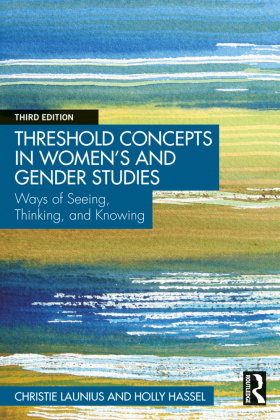
Threshold Concepts in Women's and Gender Studies: Ways of Seeing, Thinking, and Knowing is a textbook designed primarily for introduction to Women's and Gender Studies courses, with the intent of providing both a skill- and concept-based foundation in the field.
The third edition includes fully revised and expanded case studies and updated statistics; in addition, the content has been updated throughout to reflect significant news stories and cultural developments. The text is driven by a single key question: "What are the ways of thinking, seeing, and knowing that characterize Women's and Gender Studies and are valued by its practitioners?" This book illustrates four of the most critical concepts in Women's and Gender Studies-the social construction of gender, privilege and oppression, intersectionality, and feminist praxis-and grounds these concepts in multiple illustrations.
Threshold Concepts in Women's and Gender Studies develops the key concepts and ways of thinking that students need to develop a deep understanding and to approach material like feminist scholars do, across disciplines.