






Diese Website verwendet Cookies und ähnliche Technologien. Dabei handelt es sich um kleine Textdateien, die auf eurem Computer gespeichert und ausgelesen werden. Indem ihr auf "Alles akzeptieren" klickt, stimmt ihr der Verarbeitung von Daten, der Erstellung und Verarbeitung von individuellen Nutzungsprofilen über Websites und über Partner und Geräte hinweg sowie der Übermittlung eurer Daten an Drittanbieter zu, die eure Daten teilweise in Ländern außerhalb der Europäischen Union verarbeiten (GDPR Art. 49). Einzelheiten hierzu findet ihr in den Datenschutzhinweisen. Die Daten werden für Analysen und für eigene Zwecke Dritter verwendet. Weitere Informationen, auch über die Datenverarbeitung durch Drittanbieter und die Möglichkeit des Widerrufs, findet ihr in den Einstellungen und in unseren Datenschutzhinweisen. Hier könnt ihr mit den notwendigen Tools fortfahren.
- Verlag: Taylor & Francis
- Autor: Krish Bhaskar
- Artikel-Nr.: KNV96364506
- ISBN: 9780367755454
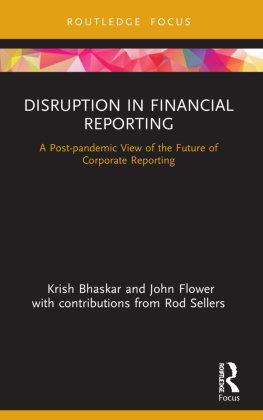
Since the global financial crisis of 2007-8, new laws and regulations have been introduced with the aim of improving the transparency in financial reporting. Despite the dramatically increased flow of information to shareholders and the public, this information flow has not always been meaningful or useful. Often it seems that it is not possible to see the wood for the trees. Financial scalds continue, as Wirecard, NMC Health, Patisserie Valerie, going back to Carillion (and many more) demonstrate. Financial and corporate reporting have never been so fraught with difficulties as companies fail to give guidance about the future in an increasingly uncertain world aided and abetted by the COVID-19 pandemic.
This concise book argues that the changes have simply masked an increase in the use of corporate PR, impression management, bullet points, glossy images, and other simulacra which allow poor performance to be masked by misleading information presented in glib boilerplate texts, images, and tables. The tone of the narrative sections in annual reports is often misleading. Drawing on extensive research and interviews with insiders and experts, this book charts what has gone wrong with financial reporting and offers a range of solutions to improve information to both investors and the public. This provides a framework for a new era of forward-looking corporate reporting and guidance based on often conflicting multiple corporate goals. The book also examines and contrasts the latest thinking by the regularity authorities.
Providing a compelling exploration of the industry's failings and present difficulties, and the impact of future disruption, this timely, thought-provoking book will be of great interest to students, researchers, and professionals as well as policy makers in accounting, financial reporting, corporate reporting, financial statement analysis, and governance.