






Diese Website verwendet Cookies und ähnliche Technologien. Dabei handelt es sich um kleine Textdateien, die auf eurem Computer gespeichert und ausgelesen werden. Indem ihr auf "Alles akzeptieren" klickt, stimmt ihr der Verarbeitung von Daten, der Erstellung und Verarbeitung von individuellen Nutzungsprofilen über Websites und über Partner und Geräte hinweg sowie der Übermittlung eurer Daten an Drittanbieter zu, die eure Daten teilweise in Ländern außerhalb der Europäischen Union verarbeiten (GDPR Art. 49). Einzelheiten hierzu findet ihr in den Datenschutzhinweisen. Die Daten werden für Analysen und für eigene Zwecke Dritter verwendet. Weitere Informationen, auch über die Datenverarbeitung durch Drittanbieter und die Möglichkeit des Widerrufs, findet ihr in den Einstellungen und in unseren Datenschutzhinweisen. Hier könnt ihr mit den notwendigen Tools fortfahren.
- Verlag: Taylor & Francis
- Autor: Jieun Kiaer
- Artikel-Nr.: KNV96364502
- ISBN: 9780367505912
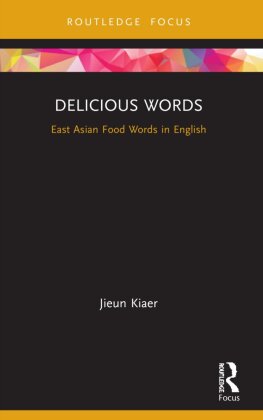
As societies across the globe are becoming increasingly interwoven at an unprecedented speed and across an impressive scope, so too is the world of food, allowing the English language to develop an ever-widening culinary vocabulary. This book examines the lives of such words in today's discourse on eating and drinking, focusing on foreign - particularly East Asian - influences on culinary terms in English, and how words are born and evolve in a modern transcultural environment. Through the lens of culinary words, this book demonstrates that foreign-origin and hybrid words, previously considered marginal, have become a main source of new imports into our daily lexicon.
With case studies from Japan to Mongolia, Hong Kong to Korea, China to Vietnam, and beyond, this book examines how more and more words are becoming borderless and forming their own new global identities. By showcasing some lesser-known regional cuisines, alongside staple dishes that many of us already know and love, this book offers a wide range of examples in order to illustrate the metamorphosis of the manner in which we engage with food words.
This book will be of interest to general readers, as well as those who are engaged in East Asian studies, English linguistics, intercultural communication studies, translation studies, and lexicography.