






Diese Website verwendet Cookies und ähnliche Technologien. Dabei handelt es sich um kleine Textdateien, die auf eurem Computer gespeichert und ausgelesen werden. Indem ihr auf "Alles akzeptieren" klickt, stimmt ihr der Verarbeitung von Daten, der Erstellung und Verarbeitung von individuellen Nutzungsprofilen über Websites und über Partner und Geräte hinweg sowie der Übermittlung eurer Daten an Drittanbieter zu, die eure Daten teilweise in Ländern außerhalb der Europäischen Union verarbeiten (GDPR Art. 49). Einzelheiten hierzu findet ihr in den Datenschutzhinweisen. Die Daten werden für Analysen und für eigene Zwecke Dritter verwendet. Weitere Informationen, auch über die Datenverarbeitung durch Drittanbieter und die Möglichkeit des Widerrufs, findet ihr in den Einstellungen und in unseren Datenschutzhinweisen. Hier könnt ihr mit den notwendigen Tools fortfahren.
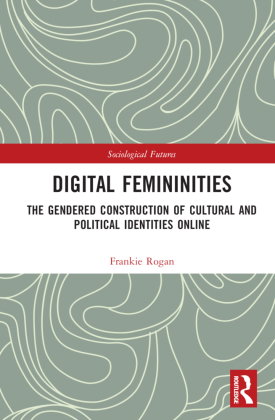
- Verlag: Taylor & Francis
- Autor: Frankie Rogan
- Artikel-Nr.: KNV96360890
- ISBN: 9780367404307
Digital Femininities: The Gendered Construction of Cultural and Political Identities Online examines the role of new media technologies in the production of girls' cultural and political identities. The book argues that the varied and complex spaces which make up our 'social media' should be conceptualised as important terrains upon which neoliberal and postfeminist subjectivities can be both reproduced and subverted. In doing so, the book explores many key issues underpinning current debates around gender politics and digital media, including gendered spatial politics, visibility, surveillance and regulation, beauty politics, and civic and political engagement and activism.
Over the last decade, the position of girls and young women within the digital landscape of social media has been a topic of much debate. On the one hand, girls' social media practices are presented as a key site of concern, wherein new digital technologies are said to have produced an intensification of individualised, neoliberal and postfeminist identities. Conversely, others have championed access to social media for young people as a potentially useful political tool, enabling previously marginalised political subjects (such as girls) to access and participate within new and exciting political cultures. Locating itself at the intersection of these two approaches, this book offers a fresh contribution to these debates. Based upon the findings from focus groups with girls and young women aged between 12 and 18 in England, the book offers an in-depth analysis of the digital cultures that emerged from the study.
This timely book will be essential reading for anyone interested in contemporary femininity and feminism and the role of digital media in the production of cultural, political and gendered identities.