






Diese Website verwendet Cookies und ähnliche Technologien. Dabei handelt es sich um kleine Textdateien, die auf eurem Computer gespeichert und ausgelesen werden. Indem ihr auf "Alles akzeptieren" klickt, stimmt ihr der Verarbeitung von Daten, der Erstellung und Verarbeitung von individuellen Nutzungsprofilen über Websites und über Partner und Geräte hinweg sowie der Übermittlung eurer Daten an Drittanbieter zu, die eure Daten teilweise in Ländern außerhalb der Europäischen Union verarbeiten (GDPR Art. 49). Einzelheiten hierzu findet ihr in den Datenschutzhinweisen. Die Daten werden für Analysen und für eigene Zwecke Dritter verwendet. Weitere Informationen, auch über die Datenverarbeitung durch Drittanbieter und die Möglichkeit des Widerrufs, findet ihr in den Einstellungen und in unseren Datenschutzhinweisen. Hier könnt ihr mit den notwendigen Tools fortfahren.
- Verlag: Taylor & Francis
- Autor: Liz Greene
- Artikel-Nr.: KNV96360884
- ISBN: 9781138289123
Winner of the IAJS award for best authored book of 2018!
C. G. Jung had a profound interest in and involvement with astrology, which he made clear in virtually every volume of the Collected Works, as well as in many of his letters. This ancient symbolic system was of primary importance in his understanding of the nature of time, the archetypes, synchronicity, and human fate.
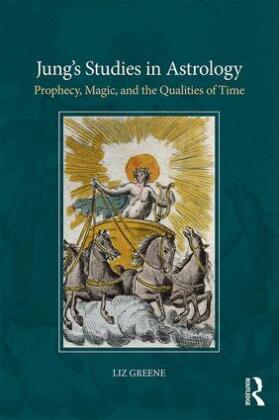
Jung's Studies in Astrology is an historical survey of his astrological work from the time he began to study the subject. It is based not only on his published writings, but also on the correspondence and documents found in his private archives, many of which have never previously seen the light of day. Liz Greene addresses with thoroughness and detailed scholarship the nature of Jung's involvement with astrology: the ancient, medieval, and modern sources he drew on, the individuals from whom he learned, his ideas about how and why it worked, its religious and philosophical implications, and its applications in the treatment of his patients as well as in his own self-understanding. Greene clearly demonstrates that any serious effort to understand the development of Jung's psychological theories, as well as the nature of his world-view, needs to involve a thorough exploration of his astrological work.
This thorough investigation of a central theme in Jung's work will appeal to analytical psychologists and Jungian psychotherapists, students and academics of Jungian and post-Jungian theory, the history of psychology, archetypal thought, mythology and folklore, the history of New Age movements, esotericism, and psychological astrology.