






Diese Website verwendet Cookies und ähnliche Technologien. Dabei handelt es sich um kleine Textdateien, die auf eurem Computer gespeichert und ausgelesen werden. Indem ihr auf "Alles akzeptieren" klickt, stimmt ihr der Verarbeitung von Daten, der Erstellung und Verarbeitung von individuellen Nutzungsprofilen über Websites und über Partner und Geräte hinweg sowie der Übermittlung eurer Daten an Drittanbieter zu, die eure Daten teilweise in Ländern außerhalb der Europäischen Union verarbeiten (GDPR Art. 49). Einzelheiten hierzu findet ihr in den Datenschutzhinweisen. Die Daten werden für Analysen und für eigene Zwecke Dritter verwendet. Weitere Informationen, auch über die Datenverarbeitung durch Drittanbieter und die Möglichkeit des Widerrufs, findet ihr in den Einstellungen und in unseren Datenschutzhinweisen. Hier könnt ihr mit den notwendigen Tools fortfahren.
- Verlag: Taylor & Francis
- Autor: Andreea Smaranda Aldea
- Artikel-Nr.: KNV96360877
- ISBN: 9781032015118
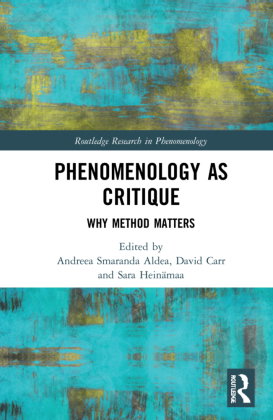
Drawing on classical Husserlian resources as well as existentialist and hermeneutical approaches, this book argues that critique is largely a question of method. It demonstrates that phenomenological discussions of acute social and political problems draw from a rich tradition of radically critical investigations in epistemology, social ontology, political theory, and ethics.
The contributions show that contemporary phenomenological investigations of various forms of oppression and domination develop new critical-analytical tools that complement those of competing theoretical approaches, such as analytics of power, critical theory, and liberal philosophy of justice. More specifically, the chapters pay close attention to the following methodological themes: the conditions for the possibility of phenomenology as critique; critique as radical reflection and free thinking; eidetic analysis and reflection of transcendental facticity and contingency of the self, of others, of the world; phenomenology and immanent critique; the self-reflective dimensions of phenomenology; and phenomenological analysis and self-transfermation and world transformation. All in all, the book explicates the multiple critical resources phenomenology has to offer, precisely in virtue of its distinctive methods and methodological commitments, and thus shows its power in tackling timely issues of social injustice.
Phenomenology as Critique: Why Method Matters will appeal to researchers and advanced students working in phenomenology, Continental philosophy, and critical theory.