






Diese Website verwendet Cookies und ähnliche Technologien. Dabei handelt es sich um kleine Textdateien, die auf eurem Computer gespeichert und ausgelesen werden. Indem ihr auf "Alles akzeptieren" klickt, stimmt ihr der Verarbeitung von Daten, der Erstellung und Verarbeitung von individuellen Nutzungsprofilen über Websites und über Partner und Geräte hinweg sowie der Übermittlung eurer Daten an Drittanbieter zu, die eure Daten teilweise in Ländern außerhalb der Europäischen Union verarbeiten (GDPR Art. 49). Einzelheiten hierzu findet ihr in den Datenschutzhinweisen. Die Daten werden für Analysen und für eigene Zwecke Dritter verwendet. Weitere Informationen, auch über die Datenverarbeitung durch Drittanbieter und die Möglichkeit des Widerrufs, findet ihr in den Einstellungen und in unseren Datenschutzhinweisen. Hier könnt ihr mit den notwendigen Tools fortfahren.
- Verlag: Taylor & Francis
- Autor: Noel McGuirk
- Artikel-Nr.: KNV96360875
- ISBN: 9780367697341
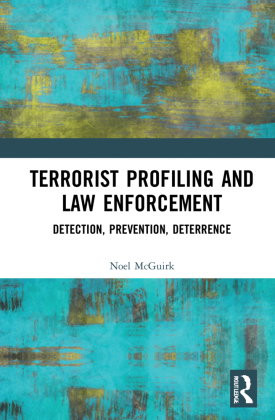
This book analyses the usefulness of terrorist profiling utilised by law enforcement officers as a pre-emptive means to assist them in the detection, prevention and deterrence of terrorism and/or its preparatory activities.
It explores two main themes arising from the phenomenon of terrorist profiling: the lawfulness of terrorist profiling and the utility of profiling. These two themes are explored in three separate parts. Firstly, the book begins by drawing upon human rights concerns arising from the use of terrorist profiling by law enforcement officers. Secondly, an analytical framework capable of making determinations on the usefulness of terrorist profiling. This framework develops a profiling spectrum that ranges from formal and informal manifestations of terrorist profiling that forms the basis for evaluating its usefulness. Finally, the book presents an examination of various manifestations of terrorist profiling by separating the analysis of the 'construction' of profiles on the one hand, from their 'application,' on the other, so as to be able to identify and examine profiling's usefulness as a technique to assist law enforcement officers make predictions about likely offender characteristics.
This book ultimately concludes that terrorist profiling should only be conducted by undertaking a systematic assessment of the construction of profiles separate from the application of profiles whilst simultaneously taking into account fundamental human rights concerns with the practice of terrorist profiling.
The work will be an essential resource for academics, law enforcement officers and lawyers in the disciplines of law, criminology, human rights, criminal justice and policing. As the book engages with terrorist profiling, it will also be of interest to those engaged in the psychology of terrorism.