






Diese Website verwendet Cookies und ähnliche Technologien. Dabei handelt es sich um kleine Textdateien, die auf eurem Computer gespeichert und ausgelesen werden. Indem ihr auf "Alles akzeptieren" klickt, stimmt ihr der Verarbeitung von Daten, der Erstellung und Verarbeitung von individuellen Nutzungsprofilen über Websites und über Partner und Geräte hinweg sowie der Übermittlung eurer Daten an Drittanbieter zu, die eure Daten teilweise in Ländern außerhalb der Europäischen Union verarbeiten (GDPR Art. 49). Einzelheiten hierzu findet ihr in den Datenschutzhinweisen. Die Daten werden für Analysen und für eigene Zwecke Dritter verwendet. Weitere Informationen, auch über die Datenverarbeitung durch Drittanbieter und die Möglichkeit des Widerrufs, findet ihr in den Einstellungen und in unseren Datenschutzhinweisen. Hier könnt ihr mit den notwendigen Tools fortfahren.
- Verlag: Taylor & Francis
- Autor: Kenneth Sebastian León
- Artikel-Nr.: KNV96364486
- ISBN: 9780367554798
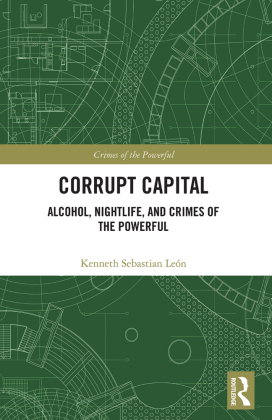
This book offers a deep dive into the social, political, and economic forces that make white-collar crime and corruption a staple feature of the nightlife economy. The author, a former bouncer-turned-bartender of party bars and nightclubs in a large U.S. city, draws from an auto-ethnographic case study to describe and explain the routine and embedded nature of corruption and deviance among the regulators and the regulated in the nightlife environment.
This text offers a contemporary and incisive theoretical framework on the criminogenic features and structural contradictions of capitalism. The author both describes and explains how the dominant political economy is rife with structural contradictions that, in turn, generate various manifestations of white-collar crime, organizational deviance, and public corruption. The author uses the bar and nightlife environment to empirically anchor these claims. Methodologically, the research is innovative in advancing inquiry into ethically and logistically challenging environments. The style of writing and framing of the text is one that punches upward and avoids the voyeuristic and reductionist tropes historically associated with "dangerous fieldwork."
Through a range of disciplinary perspectives, Corrupt Capital offers both scholarly rigor and inviting prose to advance our understanding of crimes of the relatively powerful and powerless alike. An accessible and compelling text, this book will appeal to readers in criminology, sociology, law and society, political science, and all those interested in learning about the relationship between power, law, and routinized corruption in the nightlife economy.